Thursday, May 9, 2013

Comparison Between Jeremiah And Christ


Patty Bowling


The awesomeness of the Bible is not necessarily found completely in its fulfilled prophecies, its historical accuracy, its accounts of God's mighty heroes, or it's guidelines for every day living. These are indeed fascinating aspects of the Bible, each adding its own evidence of authenticity to the "big picture" of the Bible as a whole. The Bible's greatest wonder has to be Jesus Christ and His scheme of redemption. The truly remarkable facet of the Bible is that Christ can be seen in each and every book - Old Testament as well as the New Testament. Every book, every chapter, and every line holds a picture of Jesus Christ.


The book of Jeremiah is no exception. It holds many Messianic prophecies that show a beautiful picture of the coming Savior and His Kingdom. The scathing rebukes and the condemnation preached by Jeremiah is overshadowed by the consolation and promises from God concerning the coming Messiah.


Jeremiah 23:5-6, "5 Behold, the days come, saith the LORD, that I will raise unto David a righteous Branch, and a King shall reign and prosper, and shall execute judgment and justice in the earth. 6 In his days Judah shall be saved, and Israel shall dwell safely: and this [is] his name whereby he shall be called, THE LORD OUR RIGHTEOUSNESS."


Jeremiah 30:9, "But they shall serve the LORD their God, and David their king, whom I will raise up unto them."


Jeremiah 31:31-34, "31 Behold, the days come, saith the LORD, that I will make a new covenant with the house of Israel, and with the house of Judah: 32 Not according to the covenant that I made with their fathers in the day [that] I took them by the hand to bring them out of the land of Egypt; which my covenant they brake, although I was an husband unto them, saith the LORD: 33 But this [shall be] the covenant that I will make with the house of Israel; After those days, saith the LORD, I will put my law in their inward parts, and write it in their hearts; and will be their God, and they shall be my people. 34 And they shall teach no more every man his neighbor, and every man his brother, saying, Know the LORD: for they shall all know me, from the least of them unto the greatest of them, saith the LORD: for I will forgive their iniquity, and I will remember their sin no more."


Jeremiah 33:15-16, "15 In those days, and at that time, will I cause the Branch of righteousness to grow up unto David; and he shall execute judgment and righteousness in the land. 16 In those days shall Judah be saved, and Jerusalem shall dwell safely: and this [is the name] wherewith she shall be called, The LORD our righteousness."


These Scriptures, far from being all inclusive of the prophecies of Christ given by Jeremiah, show the redemption that would be offered to all mankind - Jew and Gentile - through Jesus. The Jews anxiously awaited their coming Redeemer. Little did they know that the very man who preached God's message to them would himself be representative of their long awaited Messiah.


What Is A "Type?"


A type can be described as such: "to mark an impression. A fore-shadow; a prefigure of things to come." A type can be seen as an object, person, symbol or event that is similar but not identical to the anti-type (the fulfillment of the type). Thus, a comparison between the two will bring out an analogy that will present a clear Biblical truth.


The rules concerning typology must be kept in mind when speaking about types. This assures that the meaning of the Scriptures are not stretched into absurd proportions, or that we read into the passages things that were not intended. A type must be directly appointed or designated within the Bible in order to be used to teach doctrine. But an illustrative type, though not to be used for doctrinal teaching, must obviously illustrate God's Truth. Most importantly, we must affirm that the anti-type is always superior to the type.


The whole purpose of a type is to teach, illustrate, and/or predict Biblical truths. In this study, we can see Jeremiah as an illustrative type of Christ, being that it is not specifically designated in the Scriptures as being a type. Let's look at some of the comparisons between Jeremiah and Christ, and we will see how Jeremiah was remarkably prefiguring the incarnate Christ.


JEREMIAH AND CHRIST

Both were "innocent blood."

Jeremiah

Jeremiah 26:15, "Be assured, however, that if you put me to death, you will bring the guilt of innocent blood on yourselves, and on this city, and on those who live in it, for in truth the LORD has sent me to you to speak all these words in your hearing."


Christ

Matthew 27:4, "I have sinned, he said, for I have betrayed innocent blood." (Judas speaking of Jesus)


Both wept over Jerusalem's sins

and the coming judgment.

Jeremiah

Jeremiah 13:17, "But if you do not listen, I will weep in secret because of your pride, my eyes will weep bitterly, overflowing with tears, because the LORD's block will be taken captive."


Christ

Luke 19:41, "As he approached Jerusalem and saw the city, he wept over it."


Both wanted justice for their enemies. Jeremiah sought

vengeance whereas Christ sought forgiveness.

Jeremiah

Jeremiah 18:23, "But you know, O LORD, all their plots to kill me. Do not forgive their crimes or blot out their sins from your sight. Let them be overthrown before you; deal with them in the time of your anger."


Christ

Luke 23:34, "Jesus said, Father, forgive them, for they do not know what they are doing. And they divided up his clothes by casting lots."


Both were accused of being "mad."

Jeremiah

Jeremiah 29:26, "The LORD has appointed you priest in place of Jehoiada to be in charge of the house of the LORD; you should put any madman who acts like a prophet into the stocks and neck irons." (In a letter from Shemaiah to Zephaniah - speaking of Jeremiah)


Christ

John 10:20, "Many of them said, He is demon-possessed

and raving mad. Why listen to him?" (The Jews speaking

of Jesus)

Both were accused of being

self-appointed prophets.

Jeremiah

Jeremiah 29:27, "So why have you not reprimanded Jeremiah from Anathoth, who poses as a prophet among you? (In a letter from Shemaiah to Zephaniah - speaking of Jeremiah)


Christ

John 8:53, "Are you greater than our father Abraham? He died, and so did the prophets. Who do you think you are?" (speaking to Jesus)


Both were mocked by their enemies

as well as their brethren.

Jeremiah

Jeremiah 20:7, "O LORD, you deceived, and I was deceived, you overpowered me and prevailed. I am ridiculed all day long; everyone mocks me."


Christ

Luke 18:31-32, "Then He took the twelve aside and said to them, Behold, we are going up to Jerusalem, and all things that are written by the prophets concerning the Son of Man will be accomplished 32 For He will be delivered to the Gentiles and will be mocked and insulted and spit upon."


Matthew 27:31, "And when they had mocked Him, they took the robe off Him, put His own clothes on Him, and led Him away to be crucified."


Luke 22:63, "Now the men who held Jesus mocked Him and beat Him."


Their brethren and enemies waited to

catch both in a "slip of the tongue."

Jeremiah

Jeremiah 20:10, "I hear many whispering Terror on every side! Report him! Let's report him! All my friends are waiting for me to slip, saying, Perhaps he will be deceived; then we will prevail over him and take our revenge on him."


Christ

Luke 11:53-54, "When Jesus left there, the Pharisees and the teachers of the law began to oppose Him fiercely and to besiege Him with questions. 54 waiting to catch Him in something He might say."


Both were said to be worthy of death.

Jeremiah

Jeremiah 26:11, "Then the priests and the prophets said to the officials and all the people, This man should be sentenced to death because he has prophesied against this city. You have heard it with your own ears."


Christ

Matthew 26:65-66, "Then the high priest tore his clothes and said, He has spoken blasphemy! Why do we need any more witnesses? Look, now you have heard the blasphemy. 66 What do you think? He is worthy of death, they answered."


Both were defended by some of God's spokesmen.

Jeremiah

Jeremiah 26:16, "Then the officials and all the people said to the priest and the prophets, This man should not be sentenced to death! He has spoken to us in the Man of the LORD our God."


Christ

John 10:21, "But others said, These are not the sayings of a man possessed by a demon. Can a demon open the eyes of the blind?"


Both were put out of the land of the living.

Jeremiah by his enemies' desire - Jesus litertally.

Jeremiah

Jeremiah 11:19, "I had been like a gentle lamb led to the slaughter. I did not realize that they had plotted against me, saying, Let us cut him off from the land of the living, that His Name be remembered no more."


Christ

Isaiah 53:8, "By oppression and judgment He was taken away. And who can speak of his descendants? For He was cut off from the land of the living, for the transgression of my people he was stricken."


Both were "led as a lamb to the slaughter."

Jeremiah's enemies, but Jesus in fact.

Jeremiah

Jeremiah 11:19, "I had been like a gentle lamb led to the slaughter; I did not realize that they had plotted against me, saying, Let us destroy the tree and its fruit; let us cut him off from the land of the living, that his name be remembered no more."


Christ

Isaiah 53:7, "He was oppressed and afflicted, yet he did not open his mouth. He was led like a lamb to he slaughter, and as a sheep before her shearers is silent, so He did not open His mouth."


Both were conspired against to secretly be killed.

Jeremiah

Jeremiah 18:23, "But you know, O LORD, all their plots to kill me. Do not forgive their crimes or blot out their sins from your sight. Let them be overthrown before you; deal with them in the time of your anger."


Christ

John 11:53, "So from that day on they plotted to take His life.

Sunday, March 24, 2013

‘My God, my God, why have you forsaken me?'


BENEDICT XVI GENERAL AUDIENCE

Paul VI Audience Hall
Wednesday, 8 February 2012

....

Dear Brothers and Sisters, Today I would like to reflect with you on the prayer of Jesus when death was imminent, pausing to think about everything St Mark and St Matthew tell us. The two Evangelists record the prayer of the dying Jesus not only in Greek, in which their accounts are written but, because of the importance of these words, also in a mixture of Hebrew and Aramaic. In this way they have passed down not only the content but also the sound that this prayer had on Jesus’ lips: let us really listen to Jesus’ words as they were. At the same time, the Evangelists describe to us the attitude of those present at the crucifixion who did not understand — or did not want to understand — this prayer. St Mark wrote, as we have heard: “when the sixth hour had come, there was darkness over the whole land until the ninth hour. And at the ninth hour Jesus cried with a loud voice, ‘Eloi, Eloi, lama sabachthani?” which means, ‘My God, my God, why have you forsaken me?’”. (15:33-34). In the structure of the account, the prayer, Jesus’ cry, is raised at the end of the three hours of darkness that shrouded all the earth from midday until three o’clock in the afternoon. These three hours of darkness are in turn the continuation of a previous span of time, also of three hours, that began with the crucifixion of Jesus. The Evangelist Mark, in fact, tells us that “it was the third hour, when they crucified him” (15:25). All the times given in the narrative, Jesus’ six hours on the Cross are divided into two parts of equal length. The mockery of various groups which displays their scepticism and confirms their disbelief fits into the first three hours, from nine o’clock in the morning until midday. St Mark writes: “Those who passed by derided him” (15:29); “So also the chief priests mocked him to one another with the scribes” (15:31); “those who were crucified with him also reviled him” (15:32). In the following three hours, from midday until “the ninth hour” [three o’clock in the afternoon], the Evangelist spoke only of the darkness that had come down over the entire earth; only darkness fills the whole scene without any references to people’s movements or words. While Jesus is drawing ever closer to death, there is nothing but darkness that covers “the whole land”. The cosmos also takes part in this event: the darkness envelops people and things, but even at this moment of darkness God is present, he does not abandon them. In the biblical tradition darkness has an ambivalent meaning: it is a sign of the presence and action of evil, but also of a mysterious presence and action of God who can triumph over every shadow. In the Book of Exodus, for example, we read “The Lord said to Moses: “Lo, I am coming to you in a thick cloud” (19:9); and, further: “the people stood afar off, while Moses drew near to the thick darkness where God was” (20:21). And in his discourses in Deuteronomy, Moses recounts: “And you came near and stood at the foot of the mountain, while the mountain burned with fire to the heart of heaven wrapped in darkness, cloud, and gloom” (4:11); you “heard the voice out of the midst of the darkness, while the mountain was burning with fire” (5,23). In the scene of the crucifixion of Jesus the darkness engulfs the earth and the Son of God immerses himself in the shadows of death in order to bring life, with his act of love. Returning to St Mark’s narrative, in the face of the insults of various categories of people, in the face of the pall of darkness that shrouds everything, at the moment when he faces death, Jesus, with the cry of his prayer, shows that with the burden of suffering and death in which there seems to be abandonment, the absence of God, Jesus is utterly certain of the closeness of the Father who approves this supreme act of love, the total gift of himself, although the voice from on high is not heard, as it was on other occasions. In reading the Gospels we realize that in other important passages on his earthly existence Jesus had also seen the explanatory voice of God associated with the signs of the Father’s presence and approval of his journey of love. Thus in the event that follows the Baptism in the Jordan, at the opening of the heavens, the words of the Father had been heard: “Thou art my beloved Son, with thee I am well pleased” (Mk 1:11). Then in the Transfiguration, the sign of the cloud was accompanied with these words: “this is my beloved Son; listen to him” (Mk 9:7). Instead, at the approach of the death of the Crucified One, silence falls, no voice is heard but the Father’s loving gaze is fixed on his Son’s gift of love. However, what is the meaning of Jesus’ prayer, of the cry he addresses to the Father: “My God, my God, why have you forsaken me?”: doubt about his mission, about the Father’s presence? Might there not be in this prayer the knowledge that he had been forsaken? The words that Jesus addresses to the Father are the beginning of Psalm 22[21], in which the Psalmist expresses to God his being torn between feeling forsaken and the certain knowledge of God’s presence in his People’s midst. He, the Psalmist, prays: “O my God, I cry by day, but you do not answer; and by night, but find no rest. Yet you are holy, enthroned on the praises of Israel” (vv. 3-4). The Psalmist speaks of this “cry” in order to express the full suffering of his prayer to God, seemingly absent: in the moment of anguish his prayer becomes a cry. This also happens in our relationship with the Lord: when we face the most difficult and painful situations, when it seems that God does not hear, we must not be afraid to entrust the whole weight of our overburdened hearts to him, we must not fear to cry out to him in our suffering, we must be convinced that God is close, even if he seems silent. Repeating from the Cross the first words of Psalm 22[21] “Eli, Eli, lama sabachthani?” — “My God my God, why have you forsaken me?” (Mt 27:46); uttering the words of the Psalm, Jesus prays at the moment of his ultimate rejection by men, at the moment of abandonment; yet he prays, with the Psalm, in the awareness of God’s presence, even in that hour when he is feeling the human drama of death. However a question arises within us: how is it possible that such a powerful God does not intervene to save his Son from this terrible trial? It is important to understand that Jesus’ prayer is not the cry of one who meets death with despair, nor is it the cry of one who knows he has been forsaken. At this moment Jesus makes his own the whole of Psalm 22[21], the Psalm of the suffering People of Israel. In this way he takes upon himself not only the sin of his people, but also that of all men and women who are suffering from the oppression of evil and, at the same time, he places all this before God’s own heart, in the certainty that his cry will be heard in the Resurrection: “The cry of extreme anguish is at the same time the certainty of an answer from God, the certainty of salvation — not only for Jesus himself, but for ‘many’” (Jesus of Nazareth, II, pp. 213-214 Ignatius Press, San Francisco 2011). In this prayer of Jesus are contained his extreme trust and his abandonment into God’s hands, even when God seems absent, even when he seems to be silent, complying with a plan incomprehensible to us. In the Catechism of the Catholic Church we read: “in the redeeming love that always united him to the Father, he assumed us in the state of our waywardness of sin, to the point that he could say in our name from the cross: ‘My God, my God, why have you forsaken me?’” (n. 603). His is a suffering in communion with us and for us, which derives from love and already bears within it redemption, the victory of love. The bystanders at the foot of the Cross of Jesus fail to understand, thinking that his cry is a supplication addressed to Elijah. In the scene they seek to assuage his thirst in order to prolong his life and to find out whether Elijah will truly come to his aid, but with a loud cry Jesus’ earthly life comes to an end, as well as their wish. At the supreme moment, Jesus gives vent to his heart’s grief, but at the same time makes clear the meaning of the Father’s presence and his consent to the Father’s plan of salvation of humanity. We too have to face ever anew the “today” of suffering of God’s silence — we express it so often in our prayers — but we also find ourselves facing the “today” of the Resurrection, of the response of God who took upon himself our sufferings, to carry them together with us and to give us the firm hope that they will be overcome (cf. Encyclical Letter Spe Salvi, nn. 35-40). Dear friends, let us lay our daily crosses before God in our prayers, in the certainty that he is present and hears us. Jesus’ cry reminds us that in prayer we must surmount the barriers of our “ego” and our problems and open ourselves to the needs and suffering of others. May the prayer of Jesus dying on the Cross teach us to pray lovingly for our many brothers and sisters who are oppressed by the weight of daily life, who are living through difficult moments, who are in pain, who have no word of comfort; let us place all this before God’s heart, so that they too may feel the love of God who never abandons us. Many thanks.

--------------------------------------------------------------------------------

APPEAL In the past few weeks a wave of cold weather and freezing temperatures has hit some parts of Europe, giving rise to great hardship and immense damage, as we know. I would like to express my closeness to the peoples affected by this intense bad weather, while I ask for prayers for the victims and their families. At the same time, I encourage solidarity, so that those affected by these tragic events may be given generous help. * * * I greet all the English-speaking visitors and pilgrims present at today’s Audience, including groups from England, Ireland, Norway and the United States of America. I extend a special welcome to the many students who are here, and I pray that your studies may serve to deepen your knowledge and love of our Lord and Saviour Jesus Christ. Whatever darkness you experience in your lives, may you always remain firm in faith, hope and love.
May God bless all of you!

© Copyright 2012 - Libreria Editrice Vaticana

....

Taken from: http://www.vatican.va/holy_father/benedict_xvi/audiences/2012/documents/hf_ben-xvi_aud_20120208_en.html

Tuesday, February 26, 2013

Abdi’ Seal Has Egyptian Style Marks


Reading, Writing, and Reflecting
Steve Willis
Israel's King Hoshea's Name Found on an
Ancient Seal
 
Remember your memorized Old Testament dates? 722 B.C. come to mind? The ... Captivity . . . of . . . Israel by the . . . Assyrians? OK who was Northern Israel's last king? Hoshea! He reigned circa 731 to 722 B.C. when his nation fell. You can read about that in 2 Kings 17, and it took place during the times of Isaiah, Hosea, and Micah, who also speak of northern Israel's sin and captivity.
2700 Years Later
Recently a seal, used to stamp official documents, came to auction at Sotheby's in New York. In the "Antiquities and Islamic Works of Art," it was dated to the ninth to seventh centuries B.C. It was also there misidentified as Phoenician and estimated to bring $1200 to $1800 at auction. The pictures in the catalog were clear enough to bring more, for it was actually purchased for $80,000 in December 1993. Shlomo Moussaieff, an Israeli collector from London, had purchased it.
What did he get? The royal seal of King Hoshea's servant Abdi' whose longer name was probably Obadiah (not the prophet). In this case "servant" would be like "minister" in many governments, or "secretary of . . ." in the U.S. This seal is from that 732-722 B.C. time period. It would be used to establish something as official from the king or his servant by pressing their seal into soft clay or wax. This would leave an official impression, similar in purpose as a notary's stamp does for us today.
The seal was described by Andre Lemaire in the Biblical Archaeology Review: "The seal is translucent and brown carnelian or rather orange chalcedony according to an expert gemologist scaraboid in shape [like a scarab beetle spw] and perforated from top to bottom so that it might eventually be work around the neck on a string or mounted. It is one inch high, slightly over one-half inch wide and one-third inch thick" (November/December 1995, 49). There is a picture of a man walking, with his face at a profile. He is wearing a long kilt, and a short wig, and holds a scepter identified as a papyrus scepter. There are a few Egyptian-style marks, popular on many things in antiquity; notably a winged-sun where the name would normally have been. Perhaps this was especially used to curry favor with the Egyptians when Israel was trying to avoid becoming a vessel to Assyria (see 2 Kings 17:4 and Hos. 7:11).
The wording, which identifies it as relating to Bible times is on both sides of the man. It reads: L'BDY `BD HWSH', "Belonging to Abdi servant of Hoshea." The style of lettering is Old Hebrew (paleo-Hebrew) and matches this period of time, as it can be compared with other inscriptions, such as the Siloam tunnel inscription in the time of Judah's king Hezekiah. In addition to God's providence, it was probably this tunnel that saved Jerusalem from Assyrian capture at the same time of Israel's fall (see 2 Kings 18: 17, 27, 31; 19:23-24; 20:20).
A couple of other archaeological points. One, though the seal did have one at auction, the new owner also obtained a housing for seals, and it is believed that this may be the very housing box for the Abdi' seal. It was a 2-inch wide gold mounting that would hold the seal when in use. Both seal and housing are pictured on the cover of BAR.
Secondly, Lemaire wrote of other seals in the article. One from the eighth century B.C., and was made of amethyst, and the owner's name was Habli. This Habli-seal has enough points comparison to make Lemaire think both seals were made in the very same workshop, and possibly even by the same artist. Lemaire suggested it was a shop in Samaria.
Ultimately, Samaria which had become the capital of northern Israel fell to the Assyrians. Many were taken away to other lands. People from other lands were moved to Israel. Those left in the land became known as the Samaritans, and would become enemies to Judah and the Jews, even to the time of Jesus. And though history can bring us this "remnant" from the past, the Lord would pre-serve his remnant from "all Israel" such as Paul was in Christ (see Rom. 11:1-5).
Guardian of Truth XL: 6 p. 21
March 21, 1996

Sunday, February 10, 2013

The True Meaning of Easter


Archbishop Fulton J. Sheen

Archbishop Fulton J. Sheen was one of the best-known and best-loved Catholic orators of the twentieth century, reaching millions of Christians of all denominations. Presented here are his timeless reflections on the Passion, Death, and Resurrection of our Lord, combined with Scripture and Gregorian Chant to create a powerful presentation that is sure to become a family favorite.
 
....


Other Recommended Titles:

The True Meaning of Christmas

The True Meaning of Christmas

Archbishop Fulton J. Sheen's books, tapes, homilies, retreats, and television series have inspired countless souls all over the world. This digitally-mastered presentation combines classic recordings of his timeless reflections on the meaning of the Incarnation of Jesus, mixed with Gregorian Chant and seasonal music. It is sure to become a family favorite!

This is an absolute MUST for Advent every year! Archbishop Sheen has a beautiful way of explaining the miracle of Christmas! Phyllis - Bangor, ME

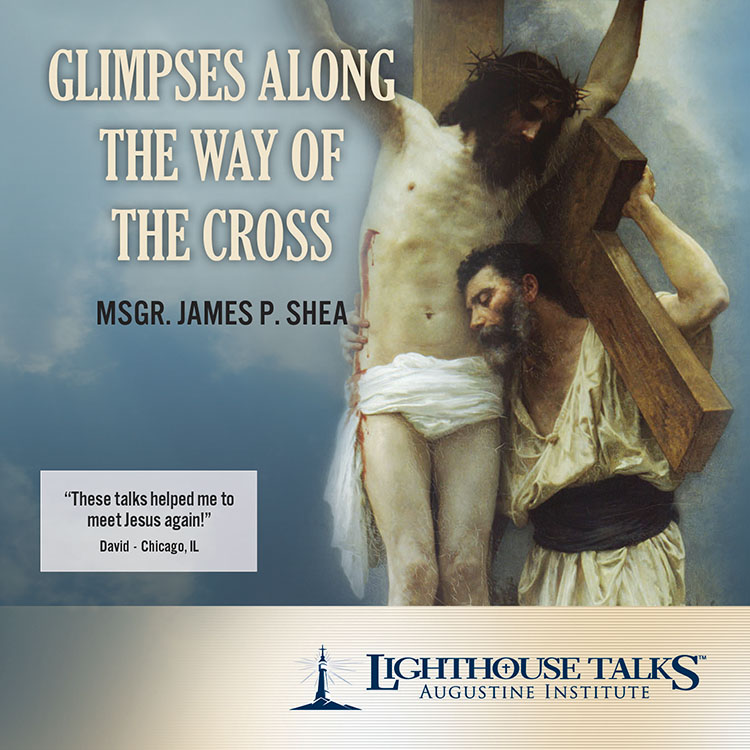
Glimpses Along The Way of the Cross

Glimpses Along The Way of the Cross

In these three beautiful talks, Fr. James Shea guides us along the Stations of the Cross, teaching us how to better open our hearts to the suffering and loneliness of Jesus on His way to Calvary. Weaving together the insights of keen believers like Fr. Richard Neuhaus, Caryll Houselander, Archbishop Fulton Sheen, and Dr. James Edwards, these powerful meditations take us into the depths of Christ's agony, and back out again into the relief and joy of what His sacrifice means for us.

Fr. Shea knows how to relate to someone in the pew who has felt pain and needs the healing only Christ can give. These talks helped me to meet Jesus again! David - Chicago, IL

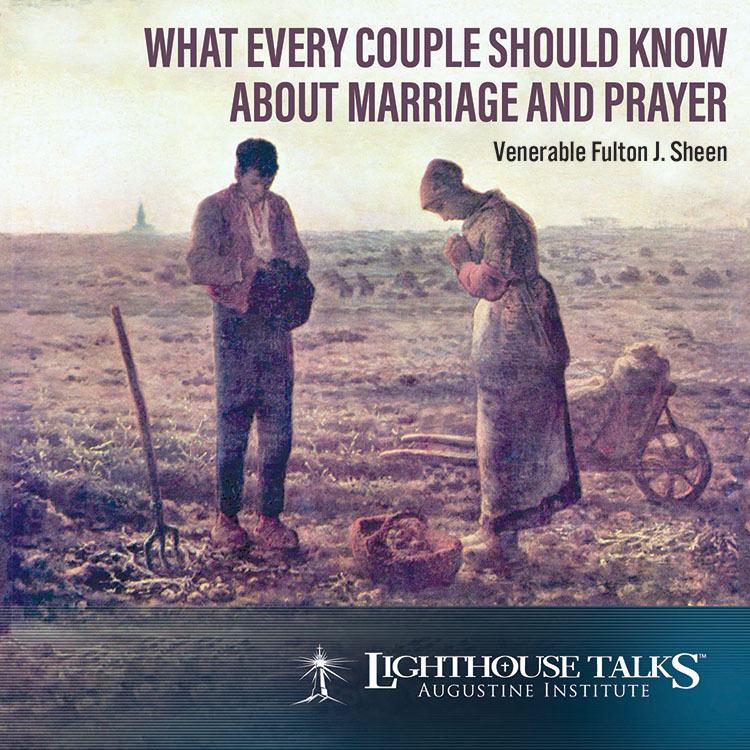
What Every Couple Should Know About Marriage and Prayer

What Every Couple Should Know About Marriage and Prayer

What is the secret of a successful marriage? How can couples deepen their commitment to one another in Christ? Beloved Catholic orator, Archbishop Fulton J. Sheen illuminates the path by focusing on the essential role that prayer must play in every marriage. His anecdotes and stories illustrate his points and make his teachings more memorable and more easily applied to everyday life.

This CD was so beneficial! Learning how to live out my Faith within a relationship is very important to me. Nichole - Federal Way, WA

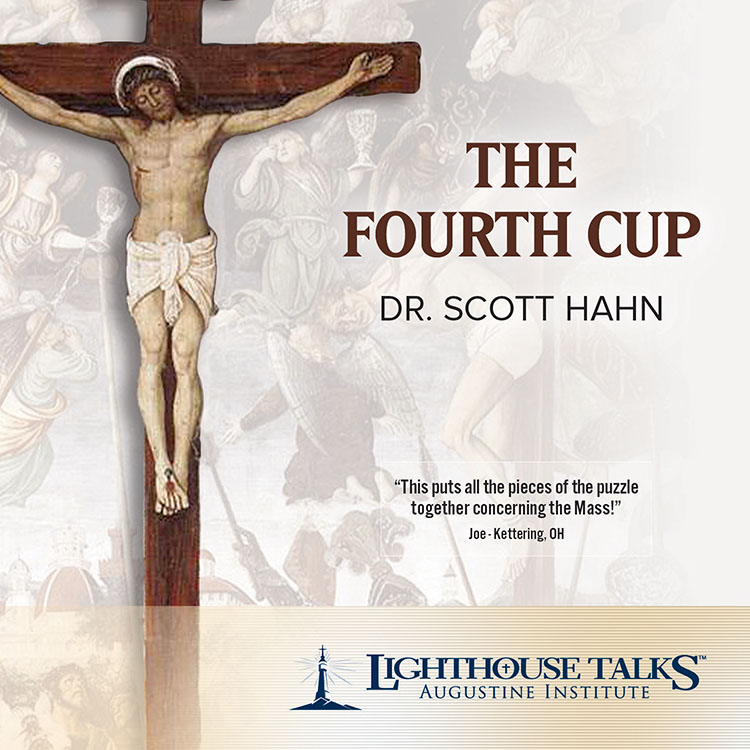
The Fourth Cup

The Fourth Cup

Well-known Catholic theologian Dr. Scott Hahn explains Christ's Paschal Sacrifice on the cross as the fulfillment of the traditional fourth cup used in the celebration of the Jewish Passover meal. He draws a symbolic parallel to the Last Supper and Christ's death on Calvary. Through his scholarly insights and important biblical connections, Mass will come alive for you as never before!

Thank you! This put all the pieces of the puzzle together concerning the Holy Eucharist. The Mass has come alive for me and my family! Joe - Kettering, OH

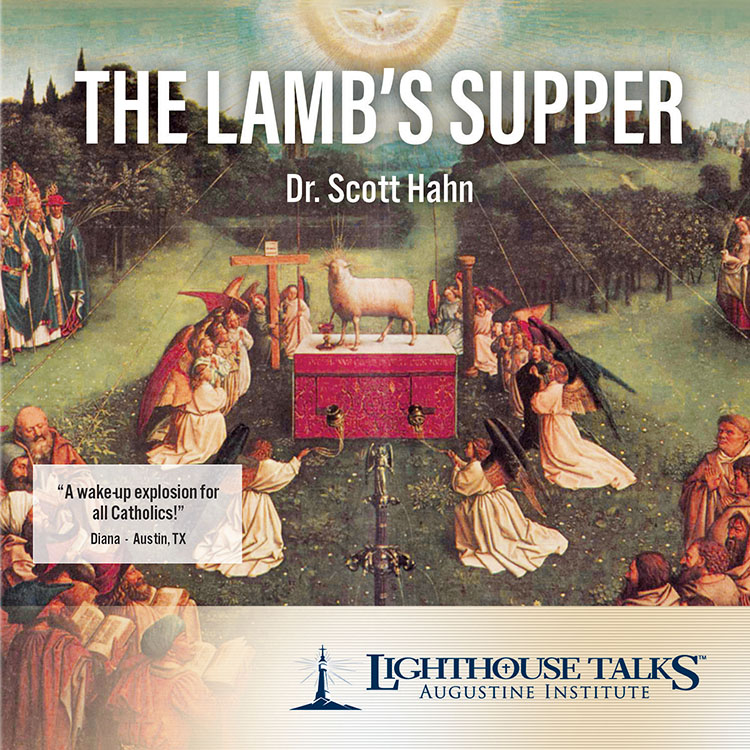
The Lamb's Supper

The Lamb's Supper

Based on his best-selling book, Dr. Scott Hahn reveals the early Christians' key to understanding the Mass: the Book of Revelation. With its bizarre imagery, mystic visions of Heaven, and end-times prophecies, it mirrors the sacrifice and celebration of the Holy Eucharist. See the Mass with new eyes, pray the Liturgy with a renewed heart, and enter into the Mass more fully and enthusiastically!

Excellent! It is hard to express the spiritual impact this CD has had on me. I don't believe I will ever celebrate the Eucharist the same way again! Floy - Manchester, KY

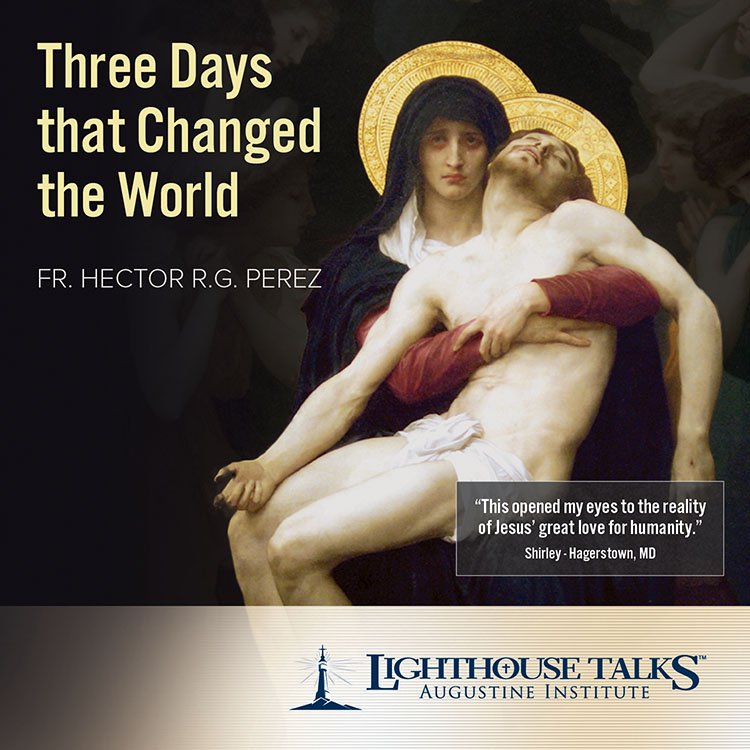
Three Days That Changed the World

Three Days That Changed the World

Fr. Perez brings us alongside Jesus in the final hours of His public ministry as He brings to fulfillment the very purpose His Incarnation, the salvation of all mankind. Fr. Perez's detailed insights of those last three days offer a moving look into the loving heart of the Messiah and detailed descriptions of his intense emotional and physical sufferings as they really were. With this knowledge, our hearts can only love him more.

A loving representation of the suffering of Our Lord featuring good scriptural unity with a unique perspective on Our Lady of Sorrows. Melanie - Allentown, PA

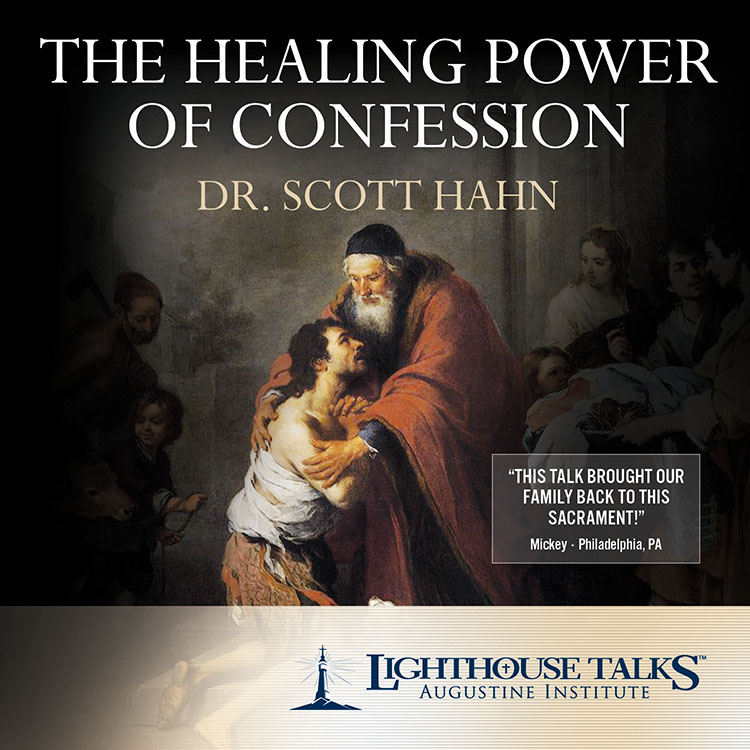
The Healing Power of Confession

The Healing Power of Confession

Dr. Scott Hahn presents the historical and biblical origins of the Sacrament of Penance (Reconciliation). He provides an important guide for new Catholics, a source of renewal for "old hands", and a challenge to all of us to deepen our relationship with Christ through regular use of the Sacrament of Penance.

This is an outstanding talk on Confession that cuts to the heart of this great Sacrament of Mercy. Father Joseph - Baltic, CT

Becoming The Best Version of Yourself

Becoming The Best Version of Yourself

Matthew Kelly possesses a powerful ability to combine the ageless tool of storytelling with a profound understanding of today's culture and the common yearnings of the human heart. He shows us how to see the challenges in our everyday lives in a new light. He will help elevate and energize you to pursue the highest values of the human spirit and become the best version of yourself.

OUTSTANDING!!! This timely presentation was filled with truth & presented in a way that was easy to identify with and understand. Anne - Youngstown, OH

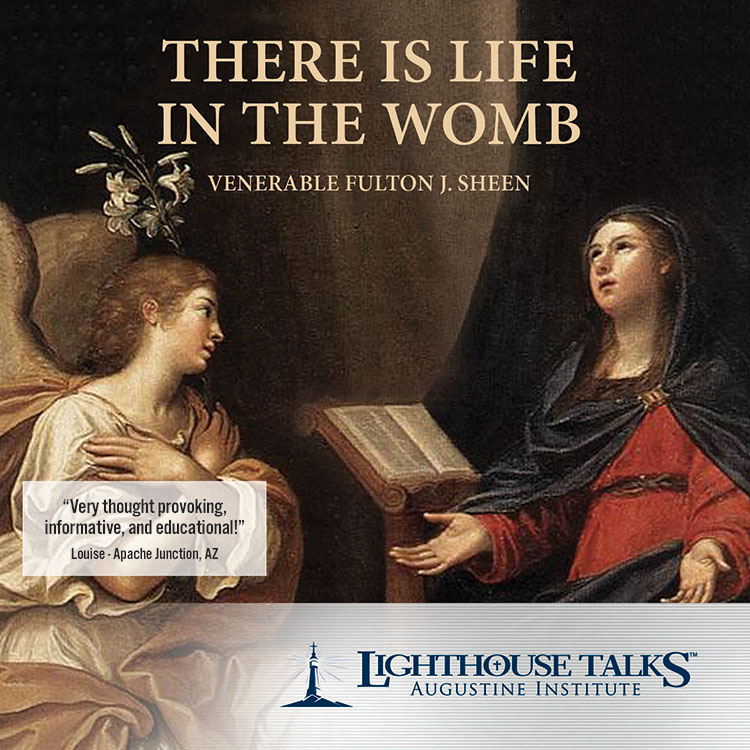
There is Life in the Womb

There is Life in the Womb

Archbishop Fulton J. Sheen was one of the best-loved and most influential preachers of the 20th century and author of over 90 books. He reached nearly 30 million people through his weekly program, Life is Worth Living, and his Cause for Canonization was officially opened in 2002. He explains the Church's teaching on life from a philosophical and historical perspective.

You have written and spoken well of the Lord Jesus Christ. You are a loyal son of the Church. Pope John Paul II -

Wednesday, January 30, 2013

How Does Archangel Raphael Heal People in the Bible's Book of Tobit?

16284928-tobias-and-the-angel-raphael--picture-from-the-holy-scriptures-old-and-new-testaments-books-collecti
 

By , About.com Guide
See More About:

Saint RaphaelPhoto by Eugenio Hansen, OFS, of a stained glass window depiction of Archangel Raphael and Tobias

Question: How Does Archangel Raphael Heal People in the Bible's Book of Tobit?
Archangel Raphael (also known as Saint Raphael) visits people to deliver both physical and spiritual healing in a famous story described in the Book of Tobit (considered part of the Bible by Catholic and Orthodox Christians).
In the story, a faithful man named Tobit sends his son Tobias to go to a foreign country to retrieve some money from a family member. Tobias hires a guide to show him the way there and doesn't realize that the guide he has hired is actually archangel Raphael in disguise. Along the way, Raphael cures Tobit of blindness and drives away a demon named Azazel who had been tormenting Sarah, the woman whom Tobias was going to marry.
Answer:

Expressing Thanks for a Job Well Done

The Book of Tobit describes how Raphael directs Tobias to use ointment made from a fish to heal his father Tobit's blindness and how Raphael guides Tobias to scare away the demon that had been tormenting Sarah. By chapter 12, Tobias still thinks that the wise and mysterious stranger accompanying him on his journey is a man. But when Tobias and Tobit try to express their gratitude by paying the companion, they discover that he is actually an archangel -- Raphael -- who wants them to direct their thanks to God:
"When the wedding feast was over, Tobit called his son Tobias and said, 'My son, you ought to think about paying the amount due to your fellow traveler; give him more than the figure agreed on.'
'Father,' he replied, 'how much am I to give him for his help? Even if I give him half the goods he brought back with me, I shall not be the loser. He has brought me back safe and sound, he has cured my wife, he has brought the money back too, and now he has cured you as well. How much am I to give him for all this?'
Tobit said, 'He has richly earned half what he brought back'." (Tobit 12:1-14).
In her book The Healing Miracles of Archangel Raphael, Doreen Virtue notes that the valuable help that Raphael gives Tobias when they're traveling together inspired people to name Raphael a patron saint of travelers: "Tobias gains wisdom, valuable experiences, and a bride along the way, thanks to Raphael. Ever since he accompanied Tobias on his journey, archangel Raphael has been a patron saint of travelers."
The story continues in Tobit 12:5-6: "So Tobias called his companion and said, 'Take half of what you brought back, in payment for all you have done, and go in peace.'
Then Raphael took them both aside and said, 'Bless God, utter his praise before all the living for the favor he has shown you. Bless and extol his name. Proclaim before all people the deeds of God as they deserve, and never tire of giving him thanks."
In her book Angelic Healing: Working with Your Angels to Heal Your Life, Eileen Elias Freeman writes that it's important to notice that "Raphael declines any thanks or reward" and instead directs the men toward praising God for their blessings. Freeman continues: "This is clearly the most central things we learn about Raphael, and, by analogy, about all the servants of God -- that they come to us by the will of God and not by their own decisions. They expect the respect that such a messenger deserves, but they will take no special thanks or glory for themselves; they refer it all back to God, who sent them. It is something to remember when we try to make the healing partnership we have with our guardian angel a two-way street. It is not. Without God to give depth and breadth to the relationship, it is flat and lifeless."

Revealing His True Identity

The story continues in Tobit 12:7-15, where Raphael finally reveals his identity to Tobit and Tobias. Raphael says: "It is right to keep the secret of a king, yet right to reveal and publish the works of God as they deserve. Do what is good, and no evil can befall you. Prayer with fasting and alms with uprightness are better than riches with iniquity. Better to practice giving to the poor than to hoard up gold. Giving to the poor saves from death and purges every kind of sin. Those who give to people in need have their fill of days; those who commit sin and do evil bring harm on themselves. I am going to tell you the whole truth, hiding nothing from you. I have already told you that it is right to keep the secret of a king, yet right too to reveal in a worthy way the words of God. So you must know that when you and Sarah were at prayer, it was I who offered your supplications before the glory of the Lord and who read them; so too when you were burying the dead."
"When you did not hesitate to get up and leave the table to go and bury a dead man, I was sent to test your faith, and at the same time God sent me to heal you and your daughter-in-law Sarah. I am Raphael, one of the seven angels who stand ever ready to enter the presence of the glory of the Lord.'

Praising God

Then, in chapter 12, verses 16 to 21, the Book of Tobit describes how Tobit and Tobias reacted to what Raphael had just told them: "They were both overwhelmed with awe; they fell on their faces in terror."
But the angel said, 'Do not be afraid; peace be with you. Bless God forever. As far as I was concerned, when I was with you, my presence was not by any decision of mine, but by the will of God; he is the one whom you must bless as long as you live, he the one that you must praise. You thought you saw me eating, but that was appearance and no more. Now bless the Lord on earth and give thanks to God. I am about to return to him who sent me from above. Write down all that has happened.' And he rose in the air.
When they stood up again, he was no longer visible. They praised God with hymns; they thanked him for having performed such wonders; had not an angel of God appeared to them?"

Thursday, January 24, 2013

Homer's Iliad Explained

Homer's Secret Iliad: The Epic of the Night Skies Decoded


This book makes real sense of The Iliad


[See also our post of 16 March 2009:
"Was Homer’s “Odyssey” Based on the Hebrew Books of Job and Tobit?"]


From the flyleaf of Homer’s Secret Iliad, by Florence and Kenneth Wood, which was deservingly awarded Book of the Year when first released in 1999.

During the 1930s the young daughter of a Kansas farmer spent night after night watching the stars and planets wheel across the vast prairie sky. Later, as a teacher in England , she combined her devotion to astronomy with a passion for Homer. This led her to a discovery which would lie buried until her daughter, Florence Wood, inherited her papers in 1991.
Her years of study, it became clear, had revealed Homer’s great epic to be also the world’s oldest book of astronomy.
[AMAIC comment: The dating of the Iliad, and whether it really belonged to the presumed time of Homer, is actually a challenging issue of its own; one with which the AMAIC hopes to come to grips elsewhere].
The changing configuration of the stars, so important for navigation and the measurement of time, had a fascination for the ancient world that it has lost today. In the Iliad, battles between Greeks and Trojans mirror the movements of stars and constellations as they appear to fight for ascendancy in the sky. The timescale of Homeric astronomy is breathtaking; elements can be dated to the ninth millennium BC [sic], long before the recorded astronomy of Mesopotamia and Egypt . Geography is also represented, since the shapes of constellations were used as ‘skymaps’ to direct ancient travellers throughout Greece and Asia Minor .


Homer was probably the last and most accomplished of a long line of bards who wove such knowledge into the epics they memorized and declaimed. After his lifetime the Greek alphabet preserved his works in writing, and the study of the skies changed too, moving away from pure observation to a science that applied mathematics and geometry. The astronomical content of the Iliad was gradually forgotten.
This unique and fascinating book unlocks its hidden meaning once again. It documents one of the most important discoveries this century about the ancient Greek world.

Wednesday, January 2, 2013

Blessing Holy Name of God: Tobit and Job


Tobit 13

Tobit’s Thanksgiving to God


13Then Tobit* said:

‘Blessed be God who lives for ever,

because his kingdom* lasts throughout all ages.

2 For he afflicts, and he shows mercy;

he leads down to Hades in the lowest regions of the earth,

and he brings up from the great abyss,*

and there is nothing that can escape his hand.

3 Acknowledge him before the nations, O children of Israel;

for he has scattered you among them.

4 He has shown you his greatness even there.

Exalt him in the presence of every living being,

because he is our Lord and he is our God;

he is our Father and he is God for ever.

5 He will afflict* you for your iniquities,

but he will again show mercy on all of you.

He will gather you from all the nations

among whom you have been scattered.

6 If you turn to him with all your heart and with all your soul,

to do what is true before him,

then he will turn to you

and will no longer hide his face from you.

So now see what he has done for you;

acknowledge him at the top of your voice.

Bless the Lord of righteousness,

and exalt the King of the ages.*

In the land of my exile I acknowledge him,

and show his power and majesty to a nation of sinners:

“Turn back, you sinners, and do what is right before him;

perhaps he may look with favour upon you and show you mercy.”

7 As for me, I exalt my God,

and my soul rejoices in the King of heaven.

8 Let all people speak of his majesty,

and acknowledge him in Jerusalem.

9 O Jerusalem, the holy city,

he afflicted* you for the deeds of your hands,*

but will again have mercy on the children of the righteous.

10 Acknowledge the Lord, for he is good,*

and bless the King of the ages,

so that his tent* may be rebuilt in you in joy.

May he cheer all those within you who are captives,

and love all those within you who are distressed,

to all generations for ever.

11 A bright light will shine to all the ends of the earth;

many nations will come to you from far away,

the inhabitants of the remotest parts of the earth to your holy name,

bearing gifts in their hands for the King of heaven.

Generation after generation will give joyful praise in you;

the name of the chosen city will endure for ever.

12 Cursed are all who speak a harsh word against you;

cursed are all who conquer you

and pull down your walls,

all who overthrow your towers

and set your homes on fire.

But blessed for ever will be all who revere you.*

13 Go, then, and rejoice over the children of the righteous,

for they will be gathered together

and will praise the Lord of the ages.

14 Happy are those who love you,

and happy are those who rejoice in your prosperity.

Happy also are all people who grieve with you

because of your afflictions;

for they will rejoice with you

and witness all your glory for ever.

15 My soul blesses* the Lord, the great King!

16 For Jerusalem will be built* as his house for all ages.

How happy I will be if a remnant of my descendants should survive

to see your glory and acknowledge the King of heaven.

The gates of Jerusalem will be built with sapphire and emerald,

and all your walls with precious stones.

The towers of Jerusalem will be built with gold,

and their battlements with pure gold.

The streets of Jerusalem will be paved

with ruby and with stones of Ophir.

17 The gates of Jerusalem will sing hymns of joy,

and all her houses will cry, “Hallelujah!

Blessed be the God of Israel!”

and the blessed will bless the holy name for ever and ever.’

....


Taken from: http://bible.oremus.org/?ql=120753435


Job 1:21

English Standard Version (ESV)


21 And he said,“Naked I came from my mother's womb, and naked shall I return. The Lord gave, and the Lord has taken away; blessed be the name of the Lord.”

....

Taken from: http://www.biblegateway.com/passage/?search=Job+1%3A21&version=ESV