Tuesday, June 18, 2013

"Ginzberg furnishes substantial evidence that Mordecai and Haman were both Jews who knew each other well".


Power struggle between Jews


Clever Queen Esther takes a chance and manages to create harmony.
EUGENE KAELLIS


Purim is based on the Book of Esther, the most esoteric book in the Hebrew Testament. Accepting a literal interpretation of the book is impossible. It is laden with evident exaggerations and inventions that defy what is known of Persian history and conventions. Its hidden meaning can be uncovered only by combining a knowledge of Persian practices during the Babylonian Captivity, the conquest of Babylon by Cyrus the Great, his Edict (sixth century BCE) and Ginzberg's Legends of the Jews which, despite its name, contains a great deal of relevant and credible history.

Using these sources, one can arrive at a plausible interpretation completely in accord with historically valid information. Esther, it turns out, describes an entirely intra-Jewish affair set in the Persian Empire, with the two major antagonists as factional leaders: Mordecai, whose followers advocate rebuilding the Jerusalem Temple, and Haman, also a Jew, whose assimilationist adherents oppose the project.

Ginzberg furnishes substantial evidence that Mordecai and Haman were both Jews who knew each other well: they were co-butlers at a royal feast and journeyed together to India to put down a rebellion against Persia. Moreover, Haman's mother had a Hebrew name and his descendants are said to have taught Torah in Akiva's academy.

The multi-ethnic Persian Empire had significant religious freedom and communal authority, as exemplified by the Edict of Cyrus, permitting Jews to return to Judah and rebuild their Temple, destroyed by the Babylonians, and allowing the inclusion of members of various ethnic and religious groups under Persian rule, offering them some representation and influence at the royal court. However, it is untrue that Mordecai or Esther achieved the high positions attributed to them in the book. Queens and chief ministers always had to have impeccably Persian ancestry. More likely, Mordecai was a spokesperson for much of the Jewish community and Esther, a harem consort.

In the Persian Empire the king's harem typically had ethnic "representatives." Vashti, Esther's predecessor, was a member of the Hamanite faction. In a typically irreverent manner, she had forced her Jewish handmaidens to violate the Sabbath. After Vashti's dismissal, widespread rebellion and Jewish inter-factional fighting flared up, calmed only by Mordecai's elevation and the appointment of Esther, who, in a measure of intrigue, initially conceals her ethnic and factional identification. Her original name was Hebrew, viz., Hadassah; Esther is Persian, derived from Astarte or Ishtar.

The book states that Mordecai first discovered a plot to kill Ahasuerus, the king. It is more likely that he was apprised by Esther who, being in the harem, a traditional centre of intrigue and espionage, would have picked up this intelligence. A more plausible explanation is that the incident was a conspiracy arranged by Mordecai, the two allegedly guilty harem eunuchs becoming dupes in a plot designed to be exposed in order to discredit the Hamanite faction and win favor for Mordecai and his followers.

Nevertheless, Haman initially gains the upper hand by convincing Ahasuerus that Mordecai's faction threatens the king's hegemony, an argument given credence by the plan of the pro-Temple faction to construct a wall around the rebuilt Temple, perhaps to defend against Persian armies after the Jews had declared their independence. Haman also probably bribes the king with promises of a share of the plunder expropriated from the wealth of the pro-Temple faction after its members are killed.

After Haman's appointment, when he and the king sat down for a drink, "Susa was perplexed," the text states, indicating that the Jews of Susa, a city with a large Mordecai-supporting faction, were outraged that someone they considered a heretic would henceforth officially advise the king regarding the Jewish community.

As Haman puts his plan in motion, Mordecai warns Esther, and the pro-Temple Jews demonstrate their solidarity with her. During the three days of fasting, while Esther prepares to petition the king, Mordecai is busy collecting a counter-bribe, referred to as "relief and deliverance ... from another quarter," which he had earlier promised Esther while trying to assuage her fears about her own safety following the disclosure of her true allegiance.

The Mordecai faction succeeds and the tolerant but venal king switches his support. Esther gathers information on Haman's collaborators and denounces him. In a staged event in the royal apartment, with the king's co-operation, she frames Haman on an assault charge, providing Ahasuerus with a face-saving device to explain the dismissal and subsequent execution of someone he had so recently elevated.

Ahasuerus, now convinced that the pro-Temple faction does not threaten him with its walled city plans, provides help from forces he had formerly promised to Haman, allowing the Mordecaite Jews to eliminate the Hamanites, but keeping his well-greased hands out of the more violent aspects of the conflict.

The book states repeatedly that the pro-Temple faction members kept no plunder derived from the defeat of their rivals, indicating that this benefit of their triumph went to Ahasuerus. The story goes on to declare that, with the victory of the Mordecai faction, "many people of the country declared themselves Jews, for the fear of the Jews had fallen upon them." Why would ordinary Persians or Babylonians, now part of the Persian Empire, fear Jews to the point of embracing a minority religion in their own country? It is more reasonable to assume that the now religiously enthusiastic Jews who had become fearful of Mordecai were assimilated Jews who had identified themselves as Persians and who had formerly allied themselves with the Hamanite faction or had previously faltered in their allegiance to the pro-Temple faction.

Purim is at once the least and the most profound of Jewish holidays. The Talmud tells us that even after the Messiah comes and the mandated holidays of Pesach, Shavuot and Sukkot are no longer celebrated, Purim will be retained. Why? Because the story reminds us that, even when obscured by bizarre circumstances, there is a continuous presence of God, often in the guise of "chance," which explains why Purim is known as the Feast of Lots.

The mood in the synagogue celebration of Purim is one of noisy revelry, even inebriation, and self-ridicule as if the participants somehow know that the book's story is a cover up for a series of dramatic and fateful events and they are winking at it and themselves.

Dr. Eugene Kaellis is a retired academic living in New Westminster.

....

Taken from: http://www.jewishindependent.ca/Archives/Mar05/archives05Mar18-07.html

Tuesday, June 4, 2013

Keeping God's Covenant: A Reflection on the Book of Tobit


I really love the book of Tobit. If you ever get an opportunity, read this book in Scripture, because it’s a really heartwarming story. It’s an ancient episode of Touched by an Angel.


The old man Tobit is a just and upright man, but he, along with the rest of Israel are living in exile during the Babylonian occupation. During this period, all of his countrymen living around him have forsaken worship of the Lord, and have turned even further to idolatry. Turning to idolatry is why God sent them into exile in the first place. Tobit, though stays true to the covenant, even though he’s mocked by everyone for doing it.


Tobit then undergoes a personal tragedy. While he’s doing an act of mercy by burying a dead man who had been abandoned in the road, he goes blind.


Now he has to send his only son, the young boy Tobiah, on a dangerous journey to find their kinsmen, somewhere in the Babylonian empire, and get help.


But before Tobit does this, he prays. Tobit prays. Tobit prays for his son’s safety. Now think of this for a minute. Put yourself in Tobit’s shoes. You’re helpless. You can’t provide for your family in a foreign country that’s hostile to you. And now you have to send your only child, a teenage boy, to look for your relatives, somewhere in this vast empire.


How would you pray? Tobit didn’t just pray. Tobit poured his heart out to God. Tobit begged God for help.


And God heard his prayer, and sent the archangel Raphael, disguised as one of Tobit’s kinsmen, to act as a guide for the boy. And in the course of their travels they find Tobit’s kinsmen, Raphael rescues a young maiden, Sarah, from being tormented by a demon, he brings young Tobiah and Sarah together and they get married, and he even finds a cure for Tobit’s blindness.


The lesson here is this: God hears the prayers of those who keep his covenant.


Once Jesus was asked to respond to the question, “Which is the greatest commandment?’ He says the greatest commandment is, “Hear O Israel! The Lord is our God, the Lord alone! Therefore you shall love the Lord your God with all your heart, with all your soul, with all your mind, and with all your strength.” This statement in Hebrew theology is called the Shema. It’s the heart of the Mosaic law.


But then Jesus goes on to say, “The second is like it, you shall love your neighbor as yourself.” The Ten Commandments are rooted in these two commandments; loving God with all our heart, soul, mind, and strength, and loving our neighbor as ourselves.


God responds to Tobit because he kept both of these great commandments. First, he kept God’s covenant even when it was difficult and life threatening to keep God’s covenant. And he also loved his neighbor as himself by the charitable acts that he preformed. And he poured his heart out to God in prayer.


If we remain true to God, God will remain true to us. If we are single hearted for the Lord, and treat others with a charitable heart, then God will hear us in our need even in the midst of a pagan empire.


It is my prayer for us all today, that we become as single hearted for God as Tobit was.


And blessed be God forever,

Father Michael Anthony Sisco

Visitor, Confraternity of Penitents
 
....


Monday, June 3, 2013

Zephaniah as the link between Babel and Pentecost


Exegetes and theologians have long argued that Pentecost should be seen as a reversal of Babel – the scattering of the human race through the proliferation of languages healed through the unifying power of the outpoured Spirit. But, if these are two events are key bookends in redemptive history, doesn’t it seem odd that relatively little is said about this in the intervening narrative? Does the OT have any concept of Babel as a problem in need of resolution, or is this a brand new theme suddenly tossed into the mix at Acts 2?
These are the questions that Paul Pastor raised in the paper he presented at the NW meeting of the Evangelical Theological Society. Paul is an MA student at Western Seminary, and the paper was a summary of his MA thesis, “Echoes of ‘Pure Speech’: An Intertextual Reading of Gen. 11:1-9; Zeph. 3:8-20; and Acts 1-2.” Paul has graciously allowed me to upload the complete thesis here.
The basic thrust of Paul’s argument is that Zephaniah 3:8-20 provides the intertextual link between Babel and Pentecost. As he summarizes:
Pentecost as a reversal of Babel has been widely seen by exegetes since the early days of the Church. However, these two stories are by no means simple “bookends” with empty narrative space between them. Rather, it shall be shown that an extremely significant instance of textual connection comes from the often overlooked text of Zephaniah.
It will be argued that the Babel narrative of Genesis 11:1-9 is accessed and developed by Zephaniah 3:8-20; and that that text in turn provides a guiding paradigm of Babel-reversal that is utilized by Luke in the Pentecost account of Acts 2. Seen in this way, Zephaniah’s prophecy provides an indispensable link between the two texts of Genesis and Acts; simultaneously looking back into the seminal history of the covenant community and forward to the radical in-breaking of the Spirit at the harvest feast of Pentecost.
Intertextual “echoes” of themes and motifs will be traced at length through the three texts, noting linguistic parallel, narrative similarity, and intertextual dependence for the developing trans-biblical narrative.
The thesis that follows is a fascinating example of intertextuality in biblical exegesis. After a brief summary of his intertextual method, Paul argues that the Babel narrative itself is “incomplete,” leaving the reader in suspense as the story never comes to satisfactory resolution. Paul then argues Genesis forms the clear backdrop for much of Zephaniah, setting the stage for identifying further intertextual connections between the two books.
The heart of Paul’s argument comes in the third part of the thesis, where he identifies a number of textual connections between Gen. 11 and Zeph. 3. In my opinion, intertextual linkages like this always bear the burden of proof as they need to establish real textual connections rather than mere linguistic or thematic similarities. And, Paul does a remarkable job of identifying and defending the connections at work, though you’ll have to read the thesis for yourself to follow all the different lines of argument that he offers.
Finally, Paul turns his attention to Acts 2, arguing that Acts 2 bears many of the same textual markers as the first two passages. Given the strong thematic and linguistic connections, Paul concludes that Luke intends for his readers to see Acts two as the conclusion of a narrative arc that begins in Gen. 11 and runs through Zeph. 3.
And, to wrap everything up, Paul offers a few closing words on how a study like this can impact the life and praxis of faith communities:
It is my sincere hope that this study may also impact the thinking and practice of our local churches and communities of faith. I believe that when scripture is seen with the literary intricacy and vitality that a study of this type highlights, it is compelling and powerful for those who cling to the scriptures as the word of God. The narrative excellence in view here, the thorough intentionality, and the development of a single coherent narrative across the span of centuries and as the product of three very different communities of faith should capture the attention and imagination of modern believers.
Here are a few brief ideas for what the practical and responsive outworkings of this study could look like: Our thoughts about national and international unity should be profoundly influenced by the paradigm offered in these texts. True unity is only possible across ethnic, social, lingual bounds by the power of the Spirit and for the purpose of a shared service and worship of God.
This study is a reminder that truly, “All scripture is profitable” (2 Tim. 3:16, ESV). The Hebrew Bible is frequently under read by Christian readers, and the Latter Prophets even more so. This section of our Bibles is rich with powerful imagery, concept, and nuance, coloring our theology and worldview. It ought to be increasingly read.
In addition to this, it ought to be increasingly taught and preached. Our pastors and teachers ought to carefully interact with this literature both for its compelling content, as well as the dramatic role that it plays in the over arching scriptural meta-narrative.

....

Taken from: http://marccortez.com/2011/04/01/zephaniah-as-the-link-between-babel-and-pentecost/
 

Thursday, May 9, 2013

Comparison Between Jeremiah And Christ


Patty Bowling


The awesomeness of the Bible is not necessarily found completely in its fulfilled prophecies, its historical accuracy, its accounts of God's mighty heroes, or it's guidelines for every day living. These are indeed fascinating aspects of the Bible, each adding its own evidence of authenticity to the "big picture" of the Bible as a whole. The Bible's greatest wonder has to be Jesus Christ and His scheme of redemption. The truly remarkable facet of the Bible is that Christ can be seen in each and every book - Old Testament as well as the New Testament. Every book, every chapter, and every line holds a picture of Jesus Christ.


The book of Jeremiah is no exception. It holds many Messianic prophecies that show a beautiful picture of the coming Savior and His Kingdom. The scathing rebukes and the condemnation preached by Jeremiah is overshadowed by the consolation and promises from God concerning the coming Messiah.


Jeremiah 23:5-6, "5 Behold, the days come, saith the LORD, that I will raise unto David a righteous Branch, and a King shall reign and prosper, and shall execute judgment and justice in the earth. 6 In his days Judah shall be saved, and Israel shall dwell safely: and this [is] his name whereby he shall be called, THE LORD OUR RIGHTEOUSNESS."


Jeremiah 30:9, "But they shall serve the LORD their God, and David their king, whom I will raise up unto them."


Jeremiah 31:31-34, "31 Behold, the days come, saith the LORD, that I will make a new covenant with the house of Israel, and with the house of Judah: 32 Not according to the covenant that I made with their fathers in the day [that] I took them by the hand to bring them out of the land of Egypt; which my covenant they brake, although I was an husband unto them, saith the LORD: 33 But this [shall be] the covenant that I will make with the house of Israel; After those days, saith the LORD, I will put my law in their inward parts, and write it in their hearts; and will be their God, and they shall be my people. 34 And they shall teach no more every man his neighbor, and every man his brother, saying, Know the LORD: for they shall all know me, from the least of them unto the greatest of them, saith the LORD: for I will forgive their iniquity, and I will remember their sin no more."


Jeremiah 33:15-16, "15 In those days, and at that time, will I cause the Branch of righteousness to grow up unto David; and he shall execute judgment and righteousness in the land. 16 In those days shall Judah be saved, and Jerusalem shall dwell safely: and this [is the name] wherewith she shall be called, The LORD our righteousness."


These Scriptures, far from being all inclusive of the prophecies of Christ given by Jeremiah, show the redemption that would be offered to all mankind - Jew and Gentile - through Jesus. The Jews anxiously awaited their coming Redeemer. Little did they know that the very man who preached God's message to them would himself be representative of their long awaited Messiah.


What Is A "Type?"


A type can be described as such: "to mark an impression. A fore-shadow; a prefigure of things to come." A type can be seen as an object, person, symbol or event that is similar but not identical to the anti-type (the fulfillment of the type). Thus, a comparison between the two will bring out an analogy that will present a clear Biblical truth.


The rules concerning typology must be kept in mind when speaking about types. This assures that the meaning of the Scriptures are not stretched into absurd proportions, or that we read into the passages things that were not intended. A type must be directly appointed or designated within the Bible in order to be used to teach doctrine. But an illustrative type, though not to be used for doctrinal teaching, must obviously illustrate God's Truth. Most importantly, we must affirm that the anti-type is always superior to the type.


The whole purpose of a type is to teach, illustrate, and/or predict Biblical truths. In this study, we can see Jeremiah as an illustrative type of Christ, being that it is not specifically designated in the Scriptures as being a type. Let's look at some of the comparisons between Jeremiah and Christ, and we will see how Jeremiah was remarkably prefiguring the incarnate Christ.


JEREMIAH AND CHRIST

Both were "innocent blood."

Jeremiah

Jeremiah 26:15, "Be assured, however, that if you put me to death, you will bring the guilt of innocent blood on yourselves, and on this city, and on those who live in it, for in truth the LORD has sent me to you to speak all these words in your hearing."


Christ

Matthew 27:4, "I have sinned, he said, for I have betrayed innocent blood." (Judas speaking of Jesus)


Both wept over Jerusalem's sins

and the coming judgment.

Jeremiah

Jeremiah 13:17, "But if you do not listen, I will weep in secret because of your pride, my eyes will weep bitterly, overflowing with tears, because the LORD's block will be taken captive."


Christ

Luke 19:41, "As he approached Jerusalem and saw the city, he wept over it."


Both wanted justice for their enemies. Jeremiah sought

vengeance whereas Christ sought forgiveness.

Jeremiah

Jeremiah 18:23, "But you know, O LORD, all their plots to kill me. Do not forgive their crimes or blot out their sins from your sight. Let them be overthrown before you; deal with them in the time of your anger."


Christ

Luke 23:34, "Jesus said, Father, forgive them, for they do not know what they are doing. And they divided up his clothes by casting lots."


Both were accused of being "mad."

Jeremiah

Jeremiah 29:26, "The LORD has appointed you priest in place of Jehoiada to be in charge of the house of the LORD; you should put any madman who acts like a prophet into the stocks and neck irons." (In a letter from Shemaiah to Zephaniah - speaking of Jeremiah)


Christ

John 10:20, "Many of them said, He is demon-possessed

and raving mad. Why listen to him?" (The Jews speaking

of Jesus)

Both were accused of being

self-appointed prophets.

Jeremiah

Jeremiah 29:27, "So why have you not reprimanded Jeremiah from Anathoth, who poses as a prophet among you? (In a letter from Shemaiah to Zephaniah - speaking of Jeremiah)


Christ

John 8:53, "Are you greater than our father Abraham? He died, and so did the prophets. Who do you think you are?" (speaking to Jesus)


Both were mocked by their enemies

as well as their brethren.

Jeremiah

Jeremiah 20:7, "O LORD, you deceived, and I was deceived, you overpowered me and prevailed. I am ridiculed all day long; everyone mocks me."


Christ

Luke 18:31-32, "Then He took the twelve aside and said to them, Behold, we are going up to Jerusalem, and all things that are written by the prophets concerning the Son of Man will be accomplished 32 For He will be delivered to the Gentiles and will be mocked and insulted and spit upon."


Matthew 27:31, "And when they had mocked Him, they took the robe off Him, put His own clothes on Him, and led Him away to be crucified."


Luke 22:63, "Now the men who held Jesus mocked Him and beat Him."


Their brethren and enemies waited to

catch both in a "slip of the tongue."

Jeremiah

Jeremiah 20:10, "I hear many whispering Terror on every side! Report him! Let's report him! All my friends are waiting for me to slip, saying, Perhaps he will be deceived; then we will prevail over him and take our revenge on him."


Christ

Luke 11:53-54, "When Jesus left there, the Pharisees and the teachers of the law began to oppose Him fiercely and to besiege Him with questions. 54 waiting to catch Him in something He might say."


Both were said to be worthy of death.

Jeremiah

Jeremiah 26:11, "Then the priests and the prophets said to the officials and all the people, This man should be sentenced to death because he has prophesied against this city. You have heard it with your own ears."


Christ

Matthew 26:65-66, "Then the high priest tore his clothes and said, He has spoken blasphemy! Why do we need any more witnesses? Look, now you have heard the blasphemy. 66 What do you think? He is worthy of death, they answered."


Both were defended by some of God's spokesmen.

Jeremiah

Jeremiah 26:16, "Then the officials and all the people said to the priest and the prophets, This man should not be sentenced to death! He has spoken to us in the Man of the LORD our God."


Christ

John 10:21, "But others said, These are not the sayings of a man possessed by a demon. Can a demon open the eyes of the blind?"


Both were put out of the land of the living.

Jeremiah by his enemies' desire - Jesus litertally.

Jeremiah

Jeremiah 11:19, "I had been like a gentle lamb led to the slaughter. I did not realize that they had plotted against me, saying, Let us cut him off from the land of the living, that His Name be remembered no more."


Christ

Isaiah 53:8, "By oppression and judgment He was taken away. And who can speak of his descendants? For He was cut off from the land of the living, for the transgression of my people he was stricken."


Both were "led as a lamb to the slaughter."

Jeremiah's enemies, but Jesus in fact.

Jeremiah

Jeremiah 11:19, "I had been like a gentle lamb led to the slaughter; I did not realize that they had plotted against me, saying, Let us destroy the tree and its fruit; let us cut him off from the land of the living, that his name be remembered no more."


Christ

Isaiah 53:7, "He was oppressed and afflicted, yet he did not open his mouth. He was led like a lamb to he slaughter, and as a sheep before her shearers is silent, so He did not open His mouth."


Both were conspired against to secretly be killed.

Jeremiah

Jeremiah 18:23, "But you know, O LORD, all their plots to kill me. Do not forgive their crimes or blot out their sins from your sight. Let them be overthrown before you; deal with them in the time of your anger."


Christ

John 11:53, "So from that day on they plotted to take His life.

Sunday, March 24, 2013

‘My God, my God, why have you forsaken me?'


BENEDICT XVI GENERAL AUDIENCE

Paul VI Audience Hall
Wednesday, 8 February 2012

....

Dear Brothers and Sisters, Today I would like to reflect with you on the prayer of Jesus when death was imminent, pausing to think about everything St Mark and St Matthew tell us. The two Evangelists record the prayer of the dying Jesus not only in Greek, in which their accounts are written but, because of the importance of these words, also in a mixture of Hebrew and Aramaic. In this way they have passed down not only the content but also the sound that this prayer had on Jesus’ lips: let us really listen to Jesus’ words as they were. At the same time, the Evangelists describe to us the attitude of those present at the crucifixion who did not understand — or did not want to understand — this prayer. St Mark wrote, as we have heard: “when the sixth hour had come, there was darkness over the whole land until the ninth hour. And at the ninth hour Jesus cried with a loud voice, ‘Eloi, Eloi, lama sabachthani?” which means, ‘My God, my God, why have you forsaken me?’”. (15:33-34). In the structure of the account, the prayer, Jesus’ cry, is raised at the end of the three hours of darkness that shrouded all the earth from midday until three o’clock in the afternoon. These three hours of darkness are in turn the continuation of a previous span of time, also of three hours, that began with the crucifixion of Jesus. The Evangelist Mark, in fact, tells us that “it was the third hour, when they crucified him” (15:25). All the times given in the narrative, Jesus’ six hours on the Cross are divided into two parts of equal length. The mockery of various groups which displays their scepticism and confirms their disbelief fits into the first three hours, from nine o’clock in the morning until midday. St Mark writes: “Those who passed by derided him” (15:29); “So also the chief priests mocked him to one another with the scribes” (15:31); “those who were crucified with him also reviled him” (15:32). In the following three hours, from midday until “the ninth hour” [three o’clock in the afternoon], the Evangelist spoke only of the darkness that had come down over the entire earth; only darkness fills the whole scene without any references to people’s movements or words. While Jesus is drawing ever closer to death, there is nothing but darkness that covers “the whole land”. The cosmos also takes part in this event: the darkness envelops people and things, but even at this moment of darkness God is present, he does not abandon them. In the biblical tradition darkness has an ambivalent meaning: it is a sign of the presence and action of evil, but also of a mysterious presence and action of God who can triumph over every shadow. In the Book of Exodus, for example, we read “The Lord said to Moses: “Lo, I am coming to you in a thick cloud” (19:9); and, further: “the people stood afar off, while Moses drew near to the thick darkness where God was” (20:21). And in his discourses in Deuteronomy, Moses recounts: “And you came near and stood at the foot of the mountain, while the mountain burned with fire to the heart of heaven wrapped in darkness, cloud, and gloom” (4:11); you “heard the voice out of the midst of the darkness, while the mountain was burning with fire” (5,23). In the scene of the crucifixion of Jesus the darkness engulfs the earth and the Son of God immerses himself in the shadows of death in order to bring life, with his act of love. Returning to St Mark’s narrative, in the face of the insults of various categories of people, in the face of the pall of darkness that shrouds everything, at the moment when he faces death, Jesus, with the cry of his prayer, shows that with the burden of suffering and death in which there seems to be abandonment, the absence of God, Jesus is utterly certain of the closeness of the Father who approves this supreme act of love, the total gift of himself, although the voice from on high is not heard, as it was on other occasions. In reading the Gospels we realize that in other important passages on his earthly existence Jesus had also seen the explanatory voice of God associated with the signs of the Father’s presence and approval of his journey of love. Thus in the event that follows the Baptism in the Jordan, at the opening of the heavens, the words of the Father had been heard: “Thou art my beloved Son, with thee I am well pleased” (Mk 1:11). Then in the Transfiguration, the sign of the cloud was accompanied with these words: “this is my beloved Son; listen to him” (Mk 9:7). Instead, at the approach of the death of the Crucified One, silence falls, no voice is heard but the Father’s loving gaze is fixed on his Son’s gift of love. However, what is the meaning of Jesus’ prayer, of the cry he addresses to the Father: “My God, my God, why have you forsaken me?”: doubt about his mission, about the Father’s presence? Might there not be in this prayer the knowledge that he had been forsaken? The words that Jesus addresses to the Father are the beginning of Psalm 22[21], in which the Psalmist expresses to God his being torn between feeling forsaken and the certain knowledge of God’s presence in his People’s midst. He, the Psalmist, prays: “O my God, I cry by day, but you do not answer; and by night, but find no rest. Yet you are holy, enthroned on the praises of Israel” (vv. 3-4). The Psalmist speaks of this “cry” in order to express the full suffering of his prayer to God, seemingly absent: in the moment of anguish his prayer becomes a cry. This also happens in our relationship with the Lord: when we face the most difficult and painful situations, when it seems that God does not hear, we must not be afraid to entrust the whole weight of our overburdened hearts to him, we must not fear to cry out to him in our suffering, we must be convinced that God is close, even if he seems silent. Repeating from the Cross the first words of Psalm 22[21] “Eli, Eli, lama sabachthani?” — “My God my God, why have you forsaken me?” (Mt 27:46); uttering the words of the Psalm, Jesus prays at the moment of his ultimate rejection by men, at the moment of abandonment; yet he prays, with the Psalm, in the awareness of God’s presence, even in that hour when he is feeling the human drama of death. However a question arises within us: how is it possible that such a powerful God does not intervene to save his Son from this terrible trial? It is important to understand that Jesus’ prayer is not the cry of one who meets death with despair, nor is it the cry of one who knows he has been forsaken. At this moment Jesus makes his own the whole of Psalm 22[21], the Psalm of the suffering People of Israel. In this way he takes upon himself not only the sin of his people, but also that of all men and women who are suffering from the oppression of evil and, at the same time, he places all this before God’s own heart, in the certainty that his cry will be heard in the Resurrection: “The cry of extreme anguish is at the same time the certainty of an answer from God, the certainty of salvation — not only for Jesus himself, but for ‘many’” (Jesus of Nazareth, II, pp. 213-214 Ignatius Press, San Francisco 2011). In this prayer of Jesus are contained his extreme trust and his abandonment into God’s hands, even when God seems absent, even when he seems to be silent, complying with a plan incomprehensible to us. In the Catechism of the Catholic Church we read: “in the redeeming love that always united him to the Father, he assumed us in the state of our waywardness of sin, to the point that he could say in our name from the cross: ‘My God, my God, why have you forsaken me?’” (n. 603). His is a suffering in communion with us and for us, which derives from love and already bears within it redemption, the victory of love. The bystanders at the foot of the Cross of Jesus fail to understand, thinking that his cry is a supplication addressed to Elijah. In the scene they seek to assuage his thirst in order to prolong his life and to find out whether Elijah will truly come to his aid, but with a loud cry Jesus’ earthly life comes to an end, as well as their wish. At the supreme moment, Jesus gives vent to his heart’s grief, but at the same time makes clear the meaning of the Father’s presence and his consent to the Father’s plan of salvation of humanity. We too have to face ever anew the “today” of suffering of God’s silence — we express it so often in our prayers — but we also find ourselves facing the “today” of the Resurrection, of the response of God who took upon himself our sufferings, to carry them together with us and to give us the firm hope that they will be overcome (cf. Encyclical Letter Spe Salvi, nn. 35-40). Dear friends, let us lay our daily crosses before God in our prayers, in the certainty that he is present and hears us. Jesus’ cry reminds us that in prayer we must surmount the barriers of our “ego” and our problems and open ourselves to the needs and suffering of others. May the prayer of Jesus dying on the Cross teach us to pray lovingly for our many brothers and sisters who are oppressed by the weight of daily life, who are living through difficult moments, who are in pain, who have no word of comfort; let us place all this before God’s heart, so that they too may feel the love of God who never abandons us. Many thanks.

--------------------------------------------------------------------------------

APPEAL In the past few weeks a wave of cold weather and freezing temperatures has hit some parts of Europe, giving rise to great hardship and immense damage, as we know. I would like to express my closeness to the peoples affected by this intense bad weather, while I ask for prayers for the victims and their families. At the same time, I encourage solidarity, so that those affected by these tragic events may be given generous help. * * * I greet all the English-speaking visitors and pilgrims present at today’s Audience, including groups from England, Ireland, Norway and the United States of America. I extend a special welcome to the many students who are here, and I pray that your studies may serve to deepen your knowledge and love of our Lord and Saviour Jesus Christ. Whatever darkness you experience in your lives, may you always remain firm in faith, hope and love.
May God bless all of you!

© Copyright 2012 - Libreria Editrice Vaticana

....

Taken from: http://www.vatican.va/holy_father/benedict_xvi/audiences/2012/documents/hf_ben-xvi_aud_20120208_en.html

Tuesday, February 26, 2013

Abdi’ Seal Has Egyptian Style Marks


Reading, Writing, and Reflecting
Steve Willis
Israel's King Hoshea's Name Found on an
Ancient Seal
 
Remember your memorized Old Testament dates? 722 B.C. come to mind? The ... Captivity . . . of . . . Israel by the . . . Assyrians? OK who was Northern Israel's last king? Hoshea! He reigned circa 731 to 722 B.C. when his nation fell. You can read about that in 2 Kings 17, and it took place during the times of Isaiah, Hosea, and Micah, who also speak of northern Israel's sin and captivity.
2700 Years Later
Recently a seal, used to stamp official documents, came to auction at Sotheby's in New York. In the "Antiquities and Islamic Works of Art," it was dated to the ninth to seventh centuries B.C. It was also there misidentified as Phoenician and estimated to bring $1200 to $1800 at auction. The pictures in the catalog were clear enough to bring more, for it was actually purchased for $80,000 in December 1993. Shlomo Moussaieff, an Israeli collector from London, had purchased it.
What did he get? The royal seal of King Hoshea's servant Abdi' whose longer name was probably Obadiah (not the prophet). In this case "servant" would be like "minister" in many governments, or "secretary of . . ." in the U.S. This seal is from that 732-722 B.C. time period. It would be used to establish something as official from the king or his servant by pressing their seal into soft clay or wax. This would leave an official impression, similar in purpose as a notary's stamp does for us today.
The seal was described by Andre Lemaire in the Biblical Archaeology Review: "The seal is translucent and brown carnelian or rather orange chalcedony according to an expert gemologist scaraboid in shape [like a scarab beetle spw] and perforated from top to bottom so that it might eventually be work around the neck on a string or mounted. It is one inch high, slightly over one-half inch wide and one-third inch thick" (November/December 1995, 49). There is a picture of a man walking, with his face at a profile. He is wearing a long kilt, and a short wig, and holds a scepter identified as a papyrus scepter. There are a few Egyptian-style marks, popular on many things in antiquity; notably a winged-sun where the name would normally have been. Perhaps this was especially used to curry favor with the Egyptians when Israel was trying to avoid becoming a vessel to Assyria (see 2 Kings 17:4 and Hos. 7:11).
The wording, which identifies it as relating to Bible times is on both sides of the man. It reads: L'BDY `BD HWSH', "Belonging to Abdi servant of Hoshea." The style of lettering is Old Hebrew (paleo-Hebrew) and matches this period of time, as it can be compared with other inscriptions, such as the Siloam tunnel inscription in the time of Judah's king Hezekiah. In addition to God's providence, it was probably this tunnel that saved Jerusalem from Assyrian capture at the same time of Israel's fall (see 2 Kings 18: 17, 27, 31; 19:23-24; 20:20).
A couple of other archaeological points. One, though the seal did have one at auction, the new owner also obtained a housing for seals, and it is believed that this may be the very housing box for the Abdi' seal. It was a 2-inch wide gold mounting that would hold the seal when in use. Both seal and housing are pictured on the cover of BAR.
Secondly, Lemaire wrote of other seals in the article. One from the eighth century B.C., and was made of amethyst, and the owner's name was Habli. This Habli-seal has enough points comparison to make Lemaire think both seals were made in the very same workshop, and possibly even by the same artist. Lemaire suggested it was a shop in Samaria.
Ultimately, Samaria which had become the capital of northern Israel fell to the Assyrians. Many were taken away to other lands. People from other lands were moved to Israel. Those left in the land became known as the Samaritans, and would become enemies to Judah and the Jews, even to the time of Jesus. And though history can bring us this "remnant" from the past, the Lord would pre-serve his remnant from "all Israel" such as Paul was in Christ (see Rom. 11:1-5).
Guardian of Truth XL: 6 p. 21
March 21, 1996

Sunday, February 10, 2013

The True Meaning of Easter


Archbishop Fulton J. Sheen

Archbishop Fulton J. Sheen was one of the best-known and best-loved Catholic orators of the twentieth century, reaching millions of Christians of all denominations. Presented here are his timeless reflections on the Passion, Death, and Resurrection of our Lord, combined with Scripture and Gregorian Chant to create a powerful presentation that is sure to become a family favorite.
 
....


Other Recommended Titles:

The True Meaning of Christmas

The True Meaning of Christmas

Archbishop Fulton J. Sheen's books, tapes, homilies, retreats, and television series have inspired countless souls all over the world. This digitally-mastered presentation combines classic recordings of his timeless reflections on the meaning of the Incarnation of Jesus, mixed with Gregorian Chant and seasonal music. It is sure to become a family favorite!

This is an absolute MUST for Advent every year! Archbishop Sheen has a beautiful way of explaining the miracle of Christmas! Phyllis - Bangor, ME

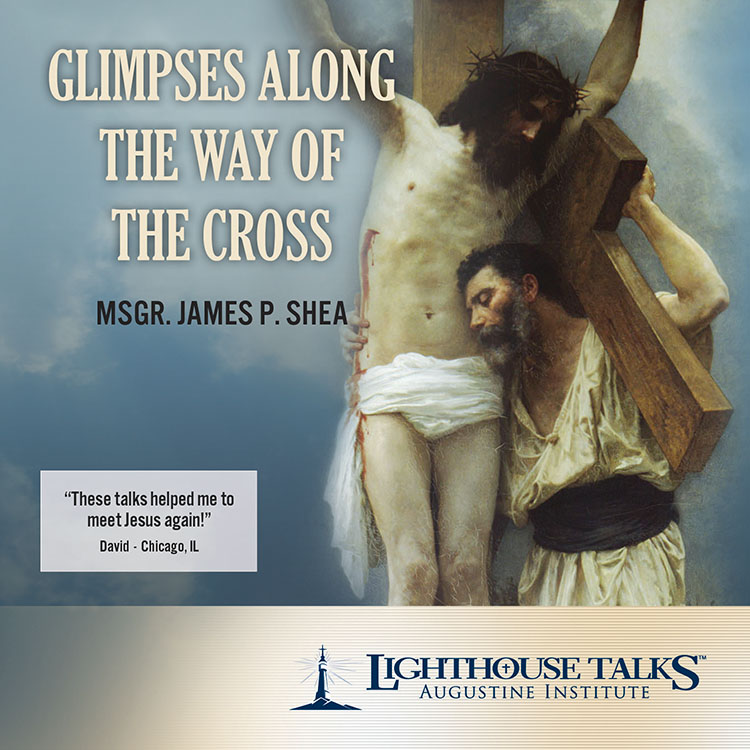
Glimpses Along The Way of the Cross

Glimpses Along The Way of the Cross

In these three beautiful talks, Fr. James Shea guides us along the Stations of the Cross, teaching us how to better open our hearts to the suffering and loneliness of Jesus on His way to Calvary. Weaving together the insights of keen believers like Fr. Richard Neuhaus, Caryll Houselander, Archbishop Fulton Sheen, and Dr. James Edwards, these powerful meditations take us into the depths of Christ's agony, and back out again into the relief and joy of what His sacrifice means for us.

Fr. Shea knows how to relate to someone in the pew who has felt pain and needs the healing only Christ can give. These talks helped me to meet Jesus again! David - Chicago, IL

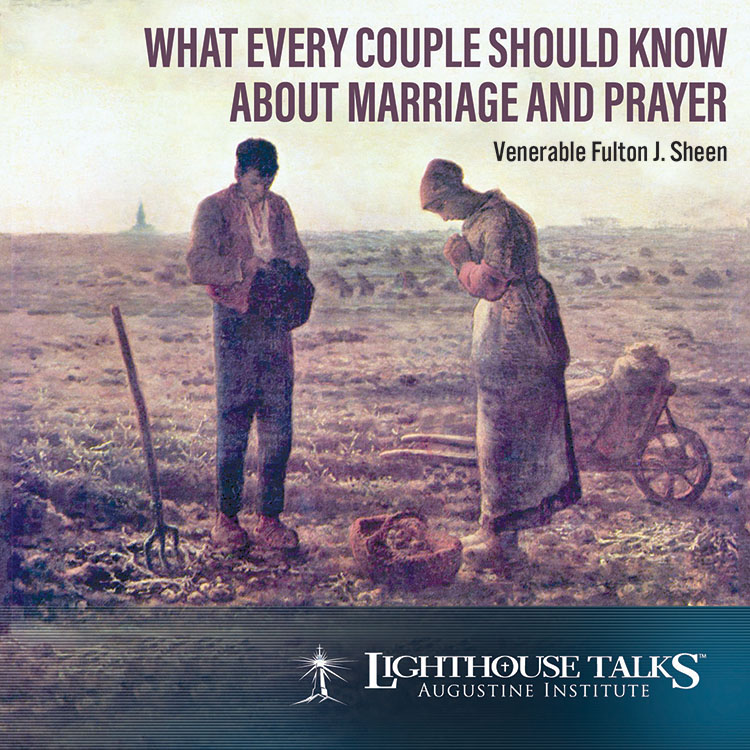
What Every Couple Should Know About Marriage and Prayer

What Every Couple Should Know About Marriage and Prayer

What is the secret of a successful marriage? How can couples deepen their commitment to one another in Christ? Beloved Catholic orator, Archbishop Fulton J. Sheen illuminates the path by focusing on the essential role that prayer must play in every marriage. His anecdotes and stories illustrate his points and make his teachings more memorable and more easily applied to everyday life.

This CD was so beneficial! Learning how to live out my Faith within a relationship is very important to me. Nichole - Federal Way, WA

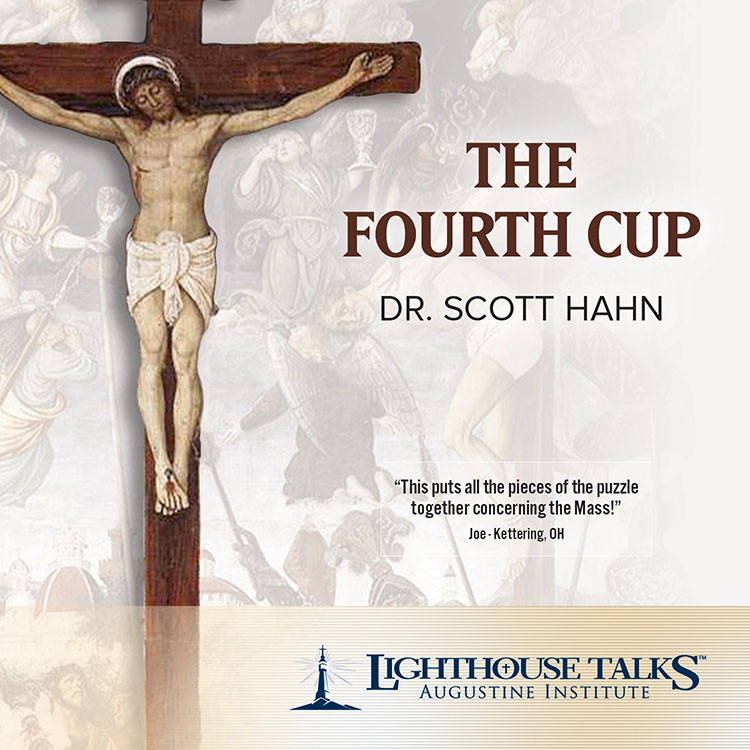
The Fourth Cup

The Fourth Cup

Well-known Catholic theologian Dr. Scott Hahn explains Christ's Paschal Sacrifice on the cross as the fulfillment of the traditional fourth cup used in the celebration of the Jewish Passover meal. He draws a symbolic parallel to the Last Supper and Christ's death on Calvary. Through his scholarly insights and important biblical connections, Mass will come alive for you as never before!

Thank you! This put all the pieces of the puzzle together concerning the Holy Eucharist. The Mass has come alive for me and my family! Joe - Kettering, OH

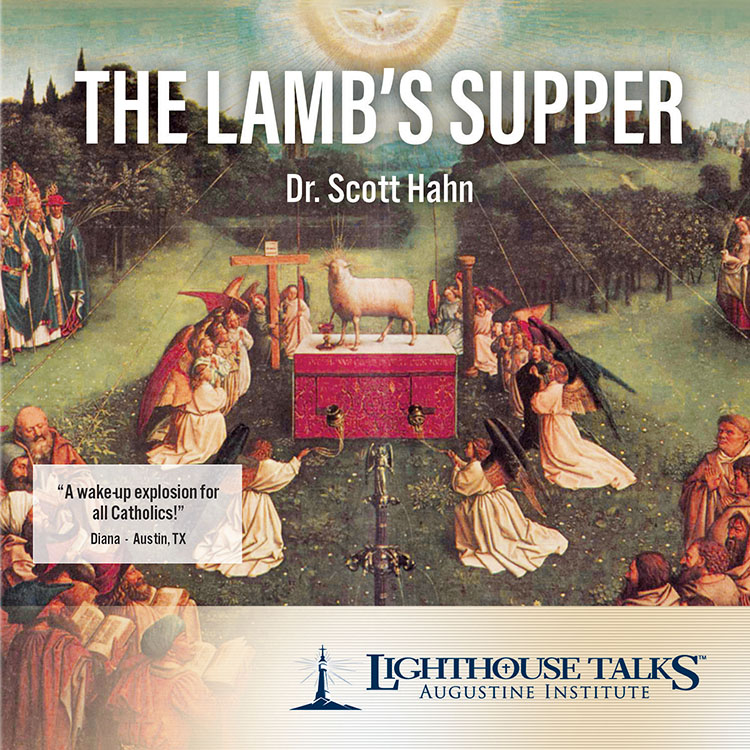
The Lamb's Supper

The Lamb's Supper

Based on his best-selling book, Dr. Scott Hahn reveals the early Christians' key to understanding the Mass: the Book of Revelation. With its bizarre imagery, mystic visions of Heaven, and end-times prophecies, it mirrors the sacrifice and celebration of the Holy Eucharist. See the Mass with new eyes, pray the Liturgy with a renewed heart, and enter into the Mass more fully and enthusiastically!

Excellent! It is hard to express the spiritual impact this CD has had on me. I don't believe I will ever celebrate the Eucharist the same way again! Floy - Manchester, KY

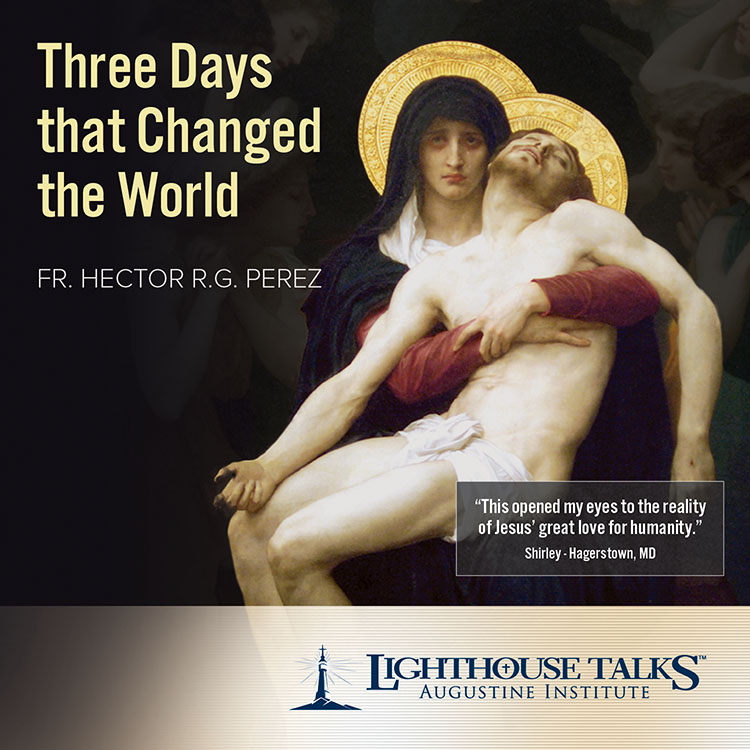
Three Days That Changed the World

Three Days That Changed the World

Fr. Perez brings us alongside Jesus in the final hours of His public ministry as He brings to fulfillment the very purpose His Incarnation, the salvation of all mankind. Fr. Perez's detailed insights of those last three days offer a moving look into the loving heart of the Messiah and detailed descriptions of his intense emotional and physical sufferings as they really were. With this knowledge, our hearts can only love him more.

A loving representation of the suffering of Our Lord featuring good scriptural unity with a unique perspective on Our Lady of Sorrows. Melanie - Allentown, PA

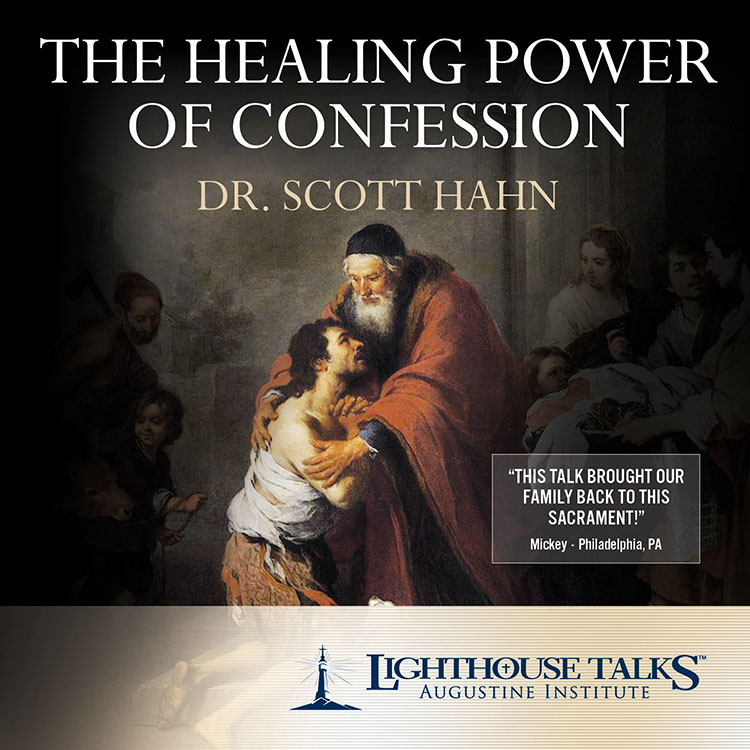
The Healing Power of Confession

The Healing Power of Confession

Dr. Scott Hahn presents the historical and biblical origins of the Sacrament of Penance (Reconciliation). He provides an important guide for new Catholics, a source of renewal for "old hands", and a challenge to all of us to deepen our relationship with Christ through regular use of the Sacrament of Penance.

This is an outstanding talk on Confession that cuts to the heart of this great Sacrament of Mercy. Father Joseph - Baltic, CT

Becoming The Best Version of Yourself

Becoming The Best Version of Yourself

Matthew Kelly possesses a powerful ability to combine the ageless tool of storytelling with a profound understanding of today's culture and the common yearnings of the human heart. He shows us how to see the challenges in our everyday lives in a new light. He will help elevate and energize you to pursue the highest values of the human spirit and become the best version of yourself.

OUTSTANDING!!! This timely presentation was filled with truth & presented in a way that was easy to identify with and understand. Anne - Youngstown, OH

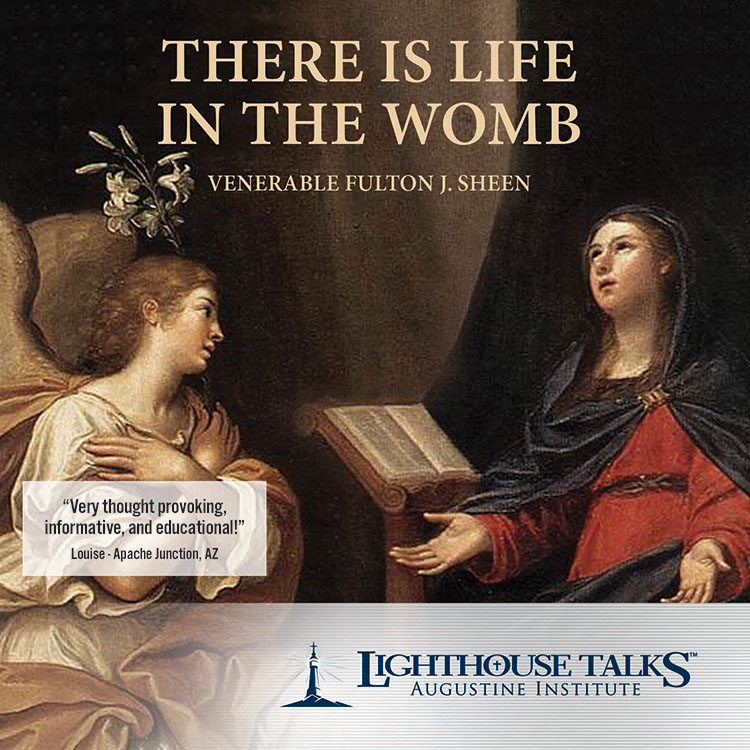
There is Life in the Womb

There is Life in the Womb

Archbishop Fulton J. Sheen was one of the best-loved and most influential preachers of the 20th century and author of over 90 books. He reached nearly 30 million people through his weekly program, Life is Worth Living, and his Cause for Canonization was officially opened in 2002. He explains the Church's teaching on life from a philosophical and historical perspective.

You have written and spoken well of the Lord Jesus Christ. You are a loyal son of the Church. Pope John Paul II -