Monday, November 11, 2019

Book of Jonah’s long tradition of historicity


“Estimates regarding the duration of the virtually universal acceptance of the historical character of the Book of Jonah range from 1800 years to “at least twenty-one centuries”.”
 
D. Hart-Davies


There is indisputably a long enduring Jewish-Christian tradition according to which the story of Jonah was a genuine historical account. According to D. Hart-Davies, writing in 1925 (Jonah: Prophet and Patriot): “Jewish tradition, in one unbroken line, testifies to a belief in the historical character of the book …”.
 
And:  “… the Christian Church, with remarkable unanimity has confirmed the Jewish tradition …”.
 
By way of contrast, Hart-Davies would then give the modern opinion:
 
Such, however, is not the view which is generally held by modern theologians.  The allegorical interpretation is widely accepted. Many treat the narrative as a fiction, with or without a very slight framework of history to rest upon. By many the non-historical character of the book is regarded as indisputable. A writer who ventures to maintain the opposite runs the risk of meeting, in certain quarters, with ridicule or invective. Sir George Adam Smith thus declaims: “How long, O Lord, must Thy poetry suffer from those who can only treat it as prose? On whatever side they stand, sceptical or orthodox, they are equally pedants, quenchers of the spiritual, creators of unbelief” ….
 
But, responded Hart-Davies, a fervent believer in the book’s historicity:
 
A strong case, surely, does not require to be buttressed by the immoderate terms of such an apostrophe. For it must not be forgotten that the great majority of Hebraists and theologians of the Church Universal, from Jerome and Augustine to Pusey and Perowne, are included in the compass of the distinguished professor’s denunciation.
 
Estimates regarding the duration of the virtually universal acceptance of the historical character of the Book of Jonah range from 1800 years to “at least twenty-one centuries”, wrote Hart-Davies. The matter really depends upon a determination of its date of authorship, its terminus a quo.
We know the approximate terminus ante quem, when what Hart-Davies called the “unbroken” tradition, was broken.
 
It is, as I (Damien Mackey) said at the start of this section, an extremely long tradition. The antiquity of the tradition, and the force of ancient Christians’ enthusiasm for the story of Jonah, is borne out in this statement by Hart-Davies:
 
The Catacombs in Rome bear striking evidence of the belief of the early Christians. No Biblical subject was more popular for mural and sarcophagi representation, in those underground cemeteries of the disciples of Jesus, than that of Jonah’s submergence and deliverance as a  symbol of faith and hope in the resurrection.
 
“The  history of Jonas [Jonah] having been put forward so emphatically by our  Lord Himself, as a type both of His own and of the general  resurrection, it is not to be wondered at that it should have held the  first place among all the subjects from the Old Testament represented in  the Catacombs. It was continually repeated in every kind of monument connected with the ancient Christian cemeteries; in the frescoes on the walls, on the bas-reliefs of the sarcophagi, on lamps and medals, and glasses, and even on the ordinary gravestones. Christian artists, however, by no means confined themselves to that one scene in the life of the prophet in which he foreshadowed the resurrection, viz., his three days’ burial in the belly of the fish, and his deliverance from it, as it were from the jaws of the grave. The other incident of his life was painted quite as commonly, viz., his lying ‘under the shadow of the booth covered with ivy on the east side of the city’ for refreshment and rest; or again, his misery and discontent, as he lay in the same place, when the sun was beating upon his head and the ivy had withered away”.
 
….  Jerome … wrote a commentary on it; and the sermons and writings of Irenaeus, Augustine, Chrysostom, and other Fathers, abound in references which show conclusively that their belief in the historicity of Jonah was unquestioned. A long and bitter controversy was waged between Jerome and Augustine as to the nature of the plant which overshadowed the prophet; but, as to the historical character of the narrative itself, they were absolutely agreed. ….
 
Hart-Davies appended an interesting footnote to this section; one which demonstrates how well instructed in Scripture were at least the early African Christians.
When the bishop who read the lesson changed the word cucurbita (a gourd) into hedera (ivy), “the whole congregation”, he wrote, “protested, and would not allow the lection to proceed till the word to which they were accustomed was adopted”.
 
Now, imagine what might have been the reaction of these ancient Christians had they heard from the pulpit, as I did have quite recently, that Jonah was a “didactic fiction”, written in “C5th BC post-exilic times”, and that it is only according to an appreciation of such a genre that one might be able to formulate an answer to a schoolchild’s simple question: “Was Jonah really in the belly of the whale?” It is all a matter of genre, we are told.

Sunday, November 3, 2019

Adrammelech and Sharezer murdered king Sennacherib


“One day, while [Sennacherib] was worshiping in the temple of his god Nisroch,
his sons Adrammelech and Sharezer struck him down with the sword and escaped
to the land of Ararat. Then his son Esar-haddon became king in his place”.
 
2 Kings 19:37


Tobit 1:21 collaborates this, but without naming the two regicidal sons:
 
“… two of Sennacherib's sons assassinated him and then escaped to the mountains of Ararat. Another son, Esarhaddon, became emperor and put Ahikar, my brother Anael's son, in charge of all the financial affairs of the empire”.
 
Tobit 1:21
 
 
As far as I (Damien Mackey) am aware, “Sharezer” has not yet been positively identified.
Emil G. Kraeling thinks that: “Sharezer was probably not a son” (“The Death of Sennacherib”, Jstor 53, No. 4, December, 1933, cf. note 32).
 
Thanks to professor Simo Parpola, “Adrammelech” has been identified as one of Sennacherib’s known sons: http://www.gatewaystobabylon.com/introduction/murderersennacherib.htm   
 
 
THE MURDERER OF SENNACHERIB
 
The news of the murder of Sennacherib, King of Assyria, on 20 Tebet, 681, was received with mixed feelings but certainly with strong emotion alI over the ancient Near East. In Israel and Babylonia, it was hailed as godsent punishment for the "godless" deeds of a hated despot; in Assyria, the reaction must have been overwhelmingly horror and resentment. Not surprisingly, then, the event is relatively well reported or referred to in contemporary and later sources, both cuneiform and non-cuneiform, and has been the subject of considerable scholar]y debate as well. In spite of all this attention, however, the most central thing about the whole affair has remained an open question: the identity of the murderer.

While alI our sources agree that he was one of the king's own sons, his name js not known from any cunciform text, and the names offered by the Bible and Berossus, alI of them evidently textually corrupt, have not been satisfactorily explained and are accordingly looked at with understandable suspicion. A theory favored in the early days of Assyriology, according to which these names should be viewed as corruptions of Ardior Arad-Ninlil. a son of Scnnacherib known from a contemporary legal document, has gradually had to give way to an entirely different interpretatjon, according to which the murderer (or at least the mastermind behind the murder) was none but Sennacherib's heir-designate and successor to throne himself, Esarhaddon, who would have been forced to engineer the assassination in order to avoid being replaced by one of his brothers. The weakness of this theory is that it is in disagreement not only with Esarhaddon's own account of the course of events, which puts the blame on his brothers, but also with the traditions of the Bible and Berossus; it also involves a lot of reading between the lines. For these reasons, it has not been universally accepted either, and the case is largely viewed as unsolved for lack of clear-cut, conclusive evidence.
 
In this paper I hope to show that the available evidence is not at alI so elusive as is commonly thought, and actually suffices for determining the identity of the assassin with reasonable certainty. There is a Neo-Babylonian letter, published decades ago, which explicitly states the name of the murderer, and this name is not only known to have been borne by a son of Sennacherib but it also virtuaIIy agrees with the name forms found in the Bible and at Berossus. The text in question, R. Harper, Assyrian and Babylonian Letters (=ABL) XI no.1091 (Chicago 1911), has escaped attention because it was completely misunderstood and mistranslated by its editor, Leroy Waterman; the name has remained unidentified because its actual pronunciation has been obscured by its misleading logographic speIIing. In what foIIows, I shaII analyse both the letter and the name in detail and finaIIy integrate tile new evidence with the previously known facts in a brief reassessment of the murder and its prehistory.
 
The beginning of ABL 1091 is lost. The first three extant lines are fragmentary, but sufficiently much of them remains to suggest that they referred to certain "Babylonian brothers'. of the writer (or writers).lu From line 4' on the text can be foIIowed better. The persons just mentioned gain knowledge of a "treaty of rebeIIion", and subsequently one of them requests an audience with the king. The expression for this is "to say the king's word" which, as shown by J. N. Postgate years ago.l It implies that the person in question applied to the king as the supreme judge and should consequently have been sent directly to the Palace.

This, however, is not what happens in the present case. Two Assyrian officials appear and question the man. Having found whom his appeal concerns, they cover his face and take him away. This, in itself. is perhaps not significant, for ordinary people were not permitted to look at the king face to face. But what foIIows is startling. The man is not taken to the king but to Arad-Ninlil, the very person he wanted to talk about, and (his face stiII covered) is ordered to speak out. Clearly under the i]lusion that he is speaking to the king, he subsequently dec]ares: "Your son AradNinlil is going to kiII you. " Things now take a drastic course.
The face of the man is uncovered: he is interrogated by Arad-Ninlil: and after that he is put to death along with his comrades mentioned in the beginning of the letter. The remaining seven lines are too fragmentary to be properly understood.
 
To bring home the significance of this letter, let me put together some basic facts. The first is that it was clearly the "treaty of rebellion" mentioned at the beginning of the text that induced the unfortunate man to appeal to the king; second, that his information concerned Arad-Ninlil; and third, that because of this information, he and alI his comrades knowing about the "treaty of rebellion " instantly got killed. Accordingly, we may conclude that the assertion "Your son Arad-Ninlil will kill you" was something Arad-Ninlil did not want to become publicly known; and since this statement was meant for the ears of the king, it is evident (1) that the person Arad-Ninlil intended to kill was the king himself and (2) that Arad-Ninlil himself was the king's own son. It follows that AradNinlil was involved in a conspiracy aiming at the murder of the king, and quite obviously was the leading figure in it.
Nowhere in the letter is the name Arad-Ninlil preserved completely; the last sign LÍL is broken away or damaged in alI instances. But no other Sargonid prince with a name beginning with the sign ARAD is known, so the restoration of the final element can be regarded as certain. Since Arad-Ninlil is only attested as a son of Sennacherib, the king referred to in the text can only be Sennacherib.
 
On the other hand. it is clear that the letter itself cannot have been addressed to Sennacherib. Had the writer wanted to warn the king of a threatening assassination, he would have expressed himself differently. Hence, one must conclude that the letter was written after the murder had already taken place, and therefore probably was addressed to Esarhaddon. As this king must. from the beginning, have been reasonably well informed about his father's murder, it would be absurd to assume that the purpose of the writer was simply to inform the king about the identity of the murderer. His aim was certainly different. If we consider the text more closely. it is easy to see that the writer took the leading role of Arad-Ninlil in the conspiracy as generally known: but what he is trying to make clear is that the two officials mentioned in the letter were responsible for the death of the informer and therefore by implication also involved in the conspiracy.Both men. Nabu-sum-iskun and Sillâ. are w.ell known as officials of Sennacherib who continued in their offices through the early years of Esarhaddon: the Kuyunjik letter archiye contains many denunciations against the latter. The present letter clearly is in the same category. and by using as an argument against Sillâ his role in silencing the informer, it actually implies that the prediction "your son Arad-Ninlil will kill you" had become a fact meanwhile.
 
Thus, the letter just discussed powerfully supports the position of the scholars who have seen in Arad-Ninlil the likeliest candidate for the murderer of Sennacherib. and in fact makes it a matter of yirtual certainty. We may hence pass on to a serious reconsideration of the problem of how to satisfactorily relate the name Arad-Ninlil to the names of the murderer (Adrammelech/Adramelos/Ardumuzan) given in the Bible and the BerossuS excerpts.
 
Actually, there is hardly any problem here at all. We are now in a position to show that the traditional reading of the (logographically spelled) Assyrian name, on which the earlier comparisons were based (and which has also been used here for convenience) is incorrect and should be abolished. In particular, the theophoric element at the end of the name (d-NIN.LÍL) has to be read [Mulissu] or [Mullêsu], not *Ninlil. This reading, first tentatively suggested by E. Reiner twelve years ago and since then increasingly well documented, represents the Neo-Assyrian form of the Akkadian name of the goddess Ninlil, attested as Mulliltum in an Old-Babylonian god list. It appears to have been very wide-spread in the first millennium, and is actually attested in syllabic spellings of the very name under consideration. On the other hand, the reading of the first element (ARAD) can be determined as [ arda] or [ ardi] on the basis of occasional syllabic spellings in contemporary and earlier Assyrian texts. And once the reading Arda-Mulissi has been established, the names of the murderer found in the non-cuneiform sources become relatively easy to explain. The Biblical Adrammelech differs from the Assyrian name only in two respects: the metathesis or r and d, and the replacement of shin at the end of the name by kaph.
The former point is negligible since r and d were virtually homographic and therefore easy to confuse in early Hebrew and Aramaic script;26 the second can be explained as a scribal error. It is not difficult to imagine a scribe correcting a seemingly nonsensical "meles" to "melek", a frequent final element in North-West Semitic personal names. The Berossian name forms show an even better match. The form Adramelos found in the Abydenos excerpt is virtually identical with Arda-Mulissi save for the already discussed metathesis of r and d (which may have been influenced by the familiarity of Eusebius with the Biblical form). The name Ardumuzan agrees with Arda-Mulissi up to its last syllable which can only be due to textual corruption. It is important to note that in this name, the metathesis of r and d does not take place.
 
In sum, it can be stated that all three names can be relatively easily traced back to Arda-Mulissi; and "then one comes to think about it. it would be very hard if not impossible to find another Assyrian name "which could provide as satisfactory an explanation for them as this one does. The identification of Arad-Ninliu Arda-Mulissi as the murderer of Sennacherib can thus be considered doubly assured. But "what were his motives, and how did he end up doing what he did? My reconstruction of the course of events is as follows:

In 694, Sennacherib eldest son and heir-designate Assur-nãdin-sumi is captured by Babylonians and carried off to Elam; he is no more heard of. The second-eldest son, Arda-Mulissi, now has every reason to expect to be the next crown prince; however, he is outmaneuvered from this position in favor of Esarhaddon, another son of Sennacherib. This one is younger than Arda-Mulissi but becomes the favorite son of Sennacherib thanks to his mother Naqia, who is not the mother of ArdaMulissi. Eventually, Esarhaddon is officially proclaimed crown prince, and all Assyria is made to swear allegiance to him. However, ArdaMulissi enjoys considerable popularity among certain circles who would like to see him as their future king rather than sickly Esarhaddon. As years pass, the opposition to Esarhaddon grows, while at the same time Arda-Mulissi and his brother(s) gain in popularity. This political development leads to a turn of events, but not to the one hoped for by ArdaMulissi and his supporters. Foreseeing trouble, Sennacherib sends Esarhaddon away from the capital to the western provinces; yet he does not revise the order of succession. In this situation, Arda-Mulissi and his borther(s) soon find themselves in a stalemate. On the one hand, they are at their political zenith while their rival brother has to languish in exile; on the other hand, the latter remains the crown prince, and there is nothing his brothers can do about it since the position of Sennacherib remains unchanged and Esarhaddon himself is out of reach in the provinces. Supposing he were able to score military victories, his popularity would undoubtedly rise while that of his brothers might easily start to sink. The only way for them to make good of the situation, it seems, is to act swiftly and take over the kingship by force. A "treaty of rebellion" is concluded; and probably not much later, Sennacherib is stabbed to death by Arda-Mulissi or, perhaps, crushed alive under a winged bull colossus guarding the temple where he had been praying at the time of the murder. This reconstruction closely follows Esarhaddon's own account of the events. and similar interpretations have been presented earlier by others.


Wednesday, October 30, 2019

Further linking Esarhaddon, Ashurbanipal


british_museum_web


by
 
Damien F. Mackey


“… there is a clear parallel between the Inscription of Esarhaddon and a text of Assurbanipal [who] … says that he has brought the peoples that live in the sea and those that inhabit the high mountains under his yoke, and this reference, as we understand it, is very like Esarhaddon’s text, since it is also “a general summary”.”
 
Arcadio Del Castillo and Julia Montenegro


Why this particularly interests me is due to my identification of Esarhaddon and Ashurbanipal as one and the same king, as well as being alter egos of the mighty Nebuchednezzar:  
 
Aligning Neo-Babylonia with Book of Daniel. Part Two: Merging late neo-Assyrians with Chaldeans
 
 
Arcadio Del Castillo and Julia Montenegro have made a valiant effort to identify the elusive biblical “Tarshish” in their article:
 
THE LOCATION OF TARSHISH: CRITICAL CONSIDERATIONS
Revue Biblique, 123, 2016, pp. 239-268
 
But what struck me when reading through this article is yet another case of, as it seems to me, a ‘historical’ duplication, Ashurbanipal claiming what Esarhaddon claimed.
Writing of the neo-Assyrian sailing efforts, the authors tell as follows (pp. 252-254):
 
… the only record we have of them sailing the Mediterranean is when Sargon II gained control of Cyprus, which was further secured by his successors, Sennacherib, Esarhaddon, and Assurbanipal, 668-627 BC….
 
My comment: As Esarhaddon, Ashurbanipal, is just the one king according to my article above, so, too, with:
 
Assyrian King Sargon II, Otherwise Known As Sennacherib
 
 
The authors continue:
 
Of course, the text of the Assyrian Inscription of Esarhaddon defines the extent of the Assyrian king’s domain, in maritime terms, from one area in the direction of the other, but we believe its extent would have been within maritime limits of the Assyrian Empire itself, in which case Tarshish would very probably have been in the Red Sea or the Indian Ocean. Thus, the text is perfectly consistent with King Solomon’s policy of procuring the products he needed in the regions to the South and East of his kingdom, which in Antiquity formed a vast emporium of all kinds of luxury goods; and since these regions had to be reached by sea, Solomon ordered a fleet to be built in Ezion-geber on the Gulf of Akaba with ships of Tarshish, for which he sought the aid of Hiram I of Tyre, who sent his men, the unrivalled seafarers of Antiquity, because the Israelites had not, until then, had any contact with the sea. It is difficult to imagine the Phoenicians helping Solomon reach places with which he had no contact using routes only known to themselves, such as the Far West; however, helping him reach destinations nearer home by routes that were generally known does seem reasonable. What is conclusive is the fact that in Esarhaddon’s Inscription the reference to the kings of the middle of the sea comes after enumerating his conquests, which are listed as: Sidon … Arza … Bazu … Tilmun … Shubria … Tyre … Egypt and Pathros … and Kush.
 
And, since Bazu seems to be situated in the northwest of Arabia and Tilmun on the Persian Gulf, very possibly Bahrain … what seems more logical is to assume that it is a delimitation in both seas of the cosmic ocean, this is the Upper Sea and the Lower Sea. So it would be a broad area that extended beyond the Mediterranean; and reference is made to it just before saying that the Assyrian king had established his power over the kings of the four regions of the Earth … which is an obvious parallel with the part of the text studied in reference to his maritime empire.
 
What can of course be readily accepted, as we have said, is that there is a clear parallel between the Inscription of Esarhaddon and a text of Assurbanipal, which is inscribed on Prism B: after stating that he ruled from the Upper Sea to the Lower Sea and that the kings of the rising sun and the setting sun brought him heavy tribute, Assurbanipal says that he has brought the peoples that live in the sea and those that inhabit the high mountains under his yoke … and this reference, as we understand it, is very like Esarhaddon’s text, since it is also “a general summary”. And in this case, everything appears to indicate that the peoples referred to were to be found in both seas. Esarhaddon’s text defines the maritime dominion of the Assyrian king from one area to another, but of course it must fall within the actual maritime limits of the Assyrian Empire itself, so its boundary cannot be defined in the Far West, since we would soon leave the area under Assyrian rule. Therefore Tarshish would very probably be on the Red Sea or the Indian Ocean ….
 [End of quote]
 

Sunday, October 27, 2019

More to the Iliad and the Odyssey than meets the eye?


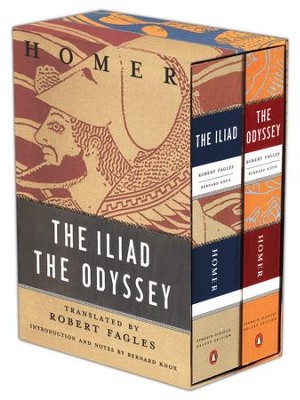
Homer: The Iliad And The Odyssey Box Set    -     Edited By: Robert Fagles
    By: Homer, Bernard Knox

 
by
 
Damien F. Mackey


Scholars variously find Homer’s classics to be replete with astronomical detail,
or bursting with biblical allusions, or serving as accurate navigational guides. 
Perhaps they encompass all of this and more.


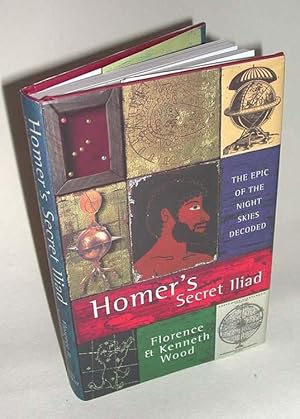
I must admit to having been completely enthralled by Florence and Kenneth Wood’s:
 
Homer's Secret Iliad
 
The Epic of the Nights Skies Decoded.
 

 Homer's Secret Iliad: The Epic of the Night Skies Decoded: WOOD, Florence and Kenneth
 
According to one review of this book:
https://archive.schillerinstitute.com/fid_97-01/fid_012_sjk_homer.html
 
Not New Age Kookery
 
Homer's Secret Iliad is rich in the elaboration of its hypotheses, such as its discussion of the gods and goddesses as planets, able to wander throughout the ecliptic band of the skies and, thus, influence the fate of the mortals, who are the fixed stars, and hence fixed in their actions. The book provides dozens of examples to bolster each of its arguments, which are extensive. Florence and Kenneth Wood spent years, following the death of Edna Leigh in 1991, working through her hypothesis, and fitting [hundreds] …. of examples into the architecture which Leigh had created.
 
In the introduction to the book, Kenneth Wood describes the cold reception received by himself and his wife, when they presented their analysis to establishment academia. Fortunately, they came in contact with serious scholars, such as Giorgio de Santillana and Hertha von Deschend, authors of the 1983 Hamlet's Mill, who are themselves investigating how the knowledge of precession shaped ancient civilizations; their studies have already pushed the calendar of civilization much farther back than the oligarchy would like.
 
Work of this sort is very different from the school of outright New Age kooks, who have many popular books currently in circulation, which present the evidence of ancient societies' knowledge of precession and astronomy, as magical, mysterious, or even coming from aliens from outer space. (One might call this the "Edgar Cayce" school of history, after the agent who claimed that his knowledge of the extreme antiquity of Egypt came from his ability to "channel" the knowledge directly from ancient Egyptians.) Instead, Homer's Secret Iliad joins the growing list of serious contributions in many disciplines piling up each year, which demonstrate that mankind has advanced, through his powers of cognition and discovery, throughout tens of millennium--rather than stumbling from one cultish civilization to the next over the last 2,500 years. ….
 
[End of quote]
 
One ought to acquire and read this terrific book.
 
My own little contribution has been of a biblical nature, regarding mainly The Odyssey:
 
Similarities to The Odyssey of the Books of Job and Tobit
 
https://www.academia.edu/8914220/Similarities_to_The_Odyssey_of_the_Books_of_Job_and_Tobit
 
Similarities to The Odyssey of the Books of Job and Tobit. Part Two: Tobit's Dog and 'Argus' in Homer
 
https://www.academia.edu/36181776/Similarities_to_The_Odyssey_of_the_Books_of_Job_and_Tobit._Part_Two_Tobits_Dog_and_Argus_in_Homer
 
this fortuitous apparent connection (Job and Tobit) seeming also to support my view that the prophet Job was Tobias, son of Tobit. See e.g. my article:
 
Job's Life and Times
 
https://www.academia.edu/3787850/Jobs_Life_and_Times
 
Much earlier:
 
St Jerome saw resemblance of Tobit to Homer's 'The Odyssey'
 
https://www.academia.edu/35896787/St_Jerome_saw_resemblance_of_Tobit_to_Homers_The_Odyssey
 
Felice Vinci (in Athens Journal of Mediterranean Studies - Volume 3, Issue 2 – Pages 163-186) has, for his part, argued for:
https://www.athensjournals.gr/mediterranean/2017-3-2-4-Vinci.pdf
 
The Nordic Origins of the Iliad and Odyssey: An Up-to-date Survey of the Theory
 
The Northern Features of Homer’s World
 
Northern Features of Climate, Clothes, Food, and Vessels
 
Homer’s world presents northern features. The climate is normally cold and unsettled, very different from what we expect in the traditional Mediterranean setting. The Iliad dwells upon violent storms (i.e., in Il. IV: 275-278, XI: 305-308, XIII: 795-799), torrential rain and disastrous floods (Il. V: 87-91, XI: 492-495, XIII: 37-141, XVI: 384-388), and often mentions snow (Il. XII, 156-158), even on lowlands (Il. XII: 278-286, X: 6-8, XV: 170-171; XIX: 357-358, III: 222). Fog is found everywhere, e.g., in the "misty sea" (Od. V, 281), and also in Troy (Il. XVII: 368), Scherie (Od. VII, 41-42), Ithaca (Od. XIII: 189), the Cyclopes’ land (Od. IX: 144), and so on.
 
As regards the sun, the Iliad hardly ever refers to its heat or rays; the Odyssey never mentions the sun warmth in Ithaca, though it refers to the sailing season. As to the seasons, there is a parallel between Homer, who mentions only three seasons: winter, spring and summer, and Tacitus’s Germans, for whom "winter, spring and summer have meaning and names, but they are unaware of the name and produce of autumn" (Germania, 26: 4). Vol. 3, No. 2 Vinci: The Nordic Origins of the Iliad and Odyssey... Clothes described in the two poems are consistent with a northern climate and the finds of the Nordic Bronze age. In the episode of the Odyssey in which Telemachus and Peisistratus are guests at Menelaus’s house in Sparta, the two young men get ready for lunch after a bath: "They wore thick cloaks and tunics" (Od. IV: 50–51). The same is said of Odysseus when he is a guest at Alcinous’s house (Od. VIII: 455-457). Similarly, Nestor’s cloak is "double and large; a thick fur stuck out" (Il. X: 134) and, when Achilles leaves for Troy, his mother thoughtfully prepares him a trunk "filled with tunics, wind-proof thick cloaks and blankets" (Il. XVI: 223-224). Those "thick cloaks and tunics" can be compared to the clothes of a man found in a Danish Bronze Age tomb: "The woolen tunic comes down to the knees and a belt ties it at the waist. He also wears a cloak, which a bronze buckle pins on his shoulder" (Bibby 1966: 245). Also Odysseus wears "a golden buckle" (Od. XIX: 226) on his cloak, and "a shining tunic around his body like the peel on a dry onion" (Od. XIX: 232-233); all of this fit what Tacitus says of Germanic clothes: "The suit for everyone is a cape with a buckle (…) The richest are distinguished by a suit (...) which is close-fitting and tight around each limb" (Germania 17: 1).
 
Regarding food, it’s remarkable that fruit, vegetables, olive oil, olives, figs never appear on the table of Homer’s heroes. Their diet was based on meat (beef, pork, goat, and game), much like that of the Vikings, who "ate meat in large quantities, so much so that they seemed to regard the pleasure of eating meat as one of the joys of life" (Pörtner 1996: 207). Homer’s characters had a hearty meal in the morning: "In the hut Odysseus and his faithful swineherd lit the fire and prepared a meal at sunrise" (Od. XVI: 1–2), like Tacitus’s Germans: "As soon as they wake up (…) they eat; everyone has his own chair and table" (Germania 22: 1). This individual table (trapeza) is typical of the Homeric world, too (Od. I: 138).
 
One should also note that, while pottery tableware was prevalent in Greece, the Nordic world was marked by "a stable and highly advanced bronze founding industry" (Fischer-Fabian 1985: 90), which squares with Homer’s poems, which mention only vessels made of metal: "A maid came to pour water from a beautiful golden jug into a silver basin" (Od. I, 136-137); wine was poured "into gold goblets" (III: 472) and "gold glasses" (I: 142). When a vessel felt to the ground in Odysseus’ palace, instead of breaking it "boomed" (bombēse, Od. XVIII: 397). Also lamps (XIX: 34), cruets (VI: 79), and urns (Il. XXIII: 253) were made of gold. As to the poor, Eumaeus the herdsman pours wine for his guests "into a wooden cup" (kissybion, Od. XVI: 52), like the cup Odysseus gives Polyphemus (Od. IX: 346). Wood, of course, is the cheapest material in the north (Estonia and Latvia have an ancient tradition of wooden beer tankards). Athens Journal of Mediterranean Studies April 2017
 
Nordic Customs and Archaism of Homer’s World
 
There are many remarkable parallels between the Homeric Achaeans and the Nordic world, in the fields of their social relations, interests, lifestyles, and so on, despite the time gap.
E.g., Homer’s habit of giving things and slaves a value in "oxen" – a new vase, decorated with flowers, was worth "the price of an ox" (Il. XXIII, 885); a big tripod was worth twelve oxen (Il. XXIII: 703); Ulysses’ nurse Eurycleia had cost twenty oxen (Od. I: 431), and so on – is comparable to the fact that, during the first Viking Age, cows were still used "as the current monetary unit" (Pörtner 1996: 199). A statement from Tacitus bridges these two distant epochs: "Cattle and oxen (...) are the Germans’ only and highly valued wealth" (Germania, 5, 1). Besides, the prominence of oxen in the economy of the Homeric world is another argument in favour of the Nordic setting, while in the Greek world other kinds of livestock are more important (one should also consider how important were beef and pork in Achaeans’ diet).
 
Still on Tacitus, Karol Modzelewski, by quoting a custom reported in Germania, 11, writes: "The mention of assembly decisions taken by a peculiar acclamation method, consisting in brandishing spears, is confirmed by the codifications, dating back to the 12th century, of the Norwegian juridical traditions, where this rite is called vapnaták" (Modzelewski 2008: 33). It is remarkable that the custom of going armed with spear to the assembly is found in Homer: Telemachus "went to the assembly, he held the bronze spear" (Od. II: 10). Thus a custom dating back to the Homeric world was still present in Viking Norway of the 12th century.
 
One should also note that Odysseus’ ship had a removable mast, a feature typical of all Homeric vessels: both the Iliad (I: 434, 480) and Odyssey (II: 424, VIII: 52) confirm that setting up and taking down the mast were customary at the beginning and the end of each mission. This feature was also typical of the Viking ships, which lowered the mast whenever there was the risk of sudden gusts or ice formation, which could cause the ship to capsize. Another structural feature typical of Viking ships, the flat keel, is found also in Homeric ones, as one can infer from the passage narrating Ulysses’ arrival in Ithaca, where the Phaeacian ship "mounted the beach by half the length" (Od. XIII: 114).
 
Another peculiar custom of the Homeric heroes is that they got off the chariots and left them aside during the duels: e.g., the Trojan hero Asius used to fight "on foot in front of his puffing horses, which the charioteer kept all the time behind him" (Il. XIII: 385–386). Scholars agree that this way of using the chariots seems to be absurd and senseless: "No one has ever fought like the heroes of Homer. They are led to battle in chariot, then they jump off to fight against the enemy. All that we know about the battle chariots in Eastern Mediterranean protests against this view of things" (Vidal-Naquet 2013: 573). However, what looks odd in the Mediterranean fits the Nordic world: according to Diodorus of Sicily, the Celts "employed two-horse chariots, each with his coachman and warrior, and, when they confronted each other in war, Vol. 3, No. 2 Vinci: The Nordic Origins of the Iliad and Odyssey... they used to throw the javelin, then they came down from the chariot and fought with the sword" (Historical Library 5: 29). Still Diodorus writes that "Brittany is said to be inhabited by native tribes conforming to their ancient way of life. In war they use chariots, like the ancient Greek heroes in the Trojan war" (Historical Library 5: 21). Julius Caesar adds other details upon the Britains: "When they have worked themselves in between the troops of horse, leap from their chariots and engage on foot. The charioteers in the mean time withdraw some little distance from the battle, and so place themselves with the chariots that, if their masters are overpowered by the number of the enemy, they may have a ready retreat to their own troops. Thus they display in battle the speed of horse, together with the firmness of infantry" (De bello Gallico IV: 33).
So, the chariot fightings narrated by the Iliad are not absurdities due to the supposed ignorance of the poet; instead, Homer must be considered the only extraordinary witness of the Nordic Bronze Age, whose archaic customs survived in Britain until Caesar’s age.
This confirms what Stuart Piggott writes: "The nobility of the [Homeric] hexameters should not deceive us into thinking that the Iliad and the Odyssey are other than the poems of a largely barbarian Bronze Age or Early Iron Age Europe. There is no Minoan or Asiatic blood in the veins of the Grecian Muses (...) They dwell remote from the Cretan-Mycenaean world and in touch with the European elements of Greek speech and culture (...) Behind Mycenaean Greece (...) lies Europe" (Piggott 1968: 126). Besides, according to Geoffrey Kirk, the Homeric poems "were created (...) by a poet, or poets, who were completely unaware of the techniques of writing," (Kirk 1989: 78) and "a recent linguistic argument suggests that the Homeric tmesis, i.e. the habit of separating adverbial and prepositional elements that were later combined into compound verbs belongs to a stage of language anterior to that represented in the Linear B tablets. If so, that would take elements of Homer’s language back more than five hundred years before his time" (Kirk 1989: 88-89).
 
That’s why "there is an absolute difference both in extension and quality between the Mycenaean society and Iliad’s" (Codino 1974: IX): Homer’s civilization appears more archaic than the Mycenaean one. There is also the odd case of Dionysus, who is an important god both in the Mycenaean period and in classical Greece, but is almost unknown in Homer: Homer’s world, therefore, probably preceded the Mycenaean civilisation, instead of following it. ….